

 Apple Podcasts

 YouTube

 Spotify

 iHeartRadio

 Podchaser

 RSS Feed

 Amazon Music

 Podcast Addict

 PocketCasts

 Deezer

 PlayerFM

 Castro

 Castbox

 Goodpods
Why IR for a SPAC Starts with the Private Investors — Vik Mittal
Serial SPAC sponsor Vik Mittal explains why investor relations for a SPAC starts with the private investors on the cap table, long before the merger.
Key Takeaways
- Investor relations for a SPAC does not start with the sponsor; it begins months earlier with private venture and early-stage investors who must agree that going public is the right path.
- Getting legacy investors comfortable with a down-round valuation requires aligning them around a long-term growth and turnaround vision that justifies public market capital.
- SPACs uniquely bridge private-market venture investing and public-market participation, offering public investors access to high-growth opportunities typically reserved for early rounds.
- Raising risk capital for a SPAC relies heavily on the sponsor's track record, industry pedigree, and ability to demonstrate institutional market understanding.
- During the quiet period while seeking a deal, SPAC sponsors must carefully navigate strict compliance and confidentiality walls before launching an active post-announcement campaign.
Investor relations for a SPAC doesn't start with the sponsor. It starts months earlier, with the private investors who have to agree that going public is the right path.
Vik Mittal, Managing Member and CIO of Meteora Capital and a serial SPAC sponsor with two decades in event-driven investing, joins host Joshua Wilson to map investor communication across the full SPAC lifecycle. Recorded the day one of his SPACs announced a definitive agreement, the conversation covers aligning a private company's cap table, raising sponsor risk capital, marketing the trust IPO to institutional investors, navigating the quiet period, and launching the post-announcement campaign across institutional and retail audiences. A practitioner's view of SPAC investor relations, disclosure discipline, and investor trust.
What We Cover:
- Why SPAC IR begins with venture and early-stage investors on the cap table
- Getting legacy investors comfortable with a down-round valuation
- How SPACs bridge private-market and public-market investors
- Why sponsor track record and pedigree drive the risk capital raise
- Lessons from the 2020–2021 SPAC boom and the downcycle that followed
- What institutional investors ask before buying into a SPAC IPO
- The quiet period: what sponsors can and can't say while seeking a deal
- Wall-crossing institutional investors under strict confidentiality
- The announcement campaign: roadshows, conferences, media, and sell-side coverage
- Engaging retail investors with an open, consistent product roadmap
Connect with Vik Mittal
Website: meteoracapital.com
LinkedIn: linkedin.com/in/vik-mittal-539903132
X: x.com/vik_mittal
About the show
The Investor Relations Podcast is produced by One Iron Network. Learn more at oneironnetwork.com.
Follow The Investor Relations Podcast
Website: theinvestorrelationspodcast.com
LinkedIn: linkedin.com/company/the-investor-relations-podcast
YouTube: youtube.com/@TheInvestorRelationsPodcast
A One Iron Network production: Executive Producer Joshua Wilson
Disclaimer: Joshua Wilson is a licensed Florida real estate broker and holds FINRA Series 79 and Series 63 licensure. The content of this podcast is for informational and educational purposes only and should not be considered legal, financial, or compliance advice. All views and opinions expressed by the host and guests are their own and do not necessarily reflect the policies or positions of any regulatory agency, organization, or employer. Listeners should consult their own legal counsel, compliance teams, or financial advisors to ensure adherence to applicable regulations, including SEC, FINRA, and other industry-specific requirements. This podcast does not constitute a solicitation or recommendation for any financial products or services.
Let’s Connect on LinkedIn:
https://www.linkedin.com/in/joshuabrucewilson/
To Contact Us, Please Visit:
https://www.theinvestorrelationspodcast.com/contact/
Frequently Asked Questions
When does investor relations for a SPAC actually begin?
Unlike traditional assumptions, SPAC investor relations begins months before deal announcement with the private company's early-stage and venture investors who must approve the transition to public markets.
How do SPACs bridge private and public market investors?
SPACs take riskier, less mature companies public, giving public institutional and retail investors access to venture-like growth profiles that are typically unavailable through regular-way IPOs.
What role does a sponsor's track record play in raising risk capital?
A sponsor's pedigree, prior deal history, and reputation are critical factors when institutional investors and hedge funds decide to back the initial founder shares and risk capital for a SPAC.
What are SPAC sponsors allowed to communicate during the target-hunt quiet period?
During the quiet period, sponsor IR is extremely limited because material details regarding target searches or Letters of Intent cannot be publicly disclosed until officially filed via 8-Ks.
00:00 - Welcome and Why SPAC Investor Relations Matters
01:00 - Vik Mittal's Path from Banking to SPAC Sponsor
03:39 - Where Investors Plug In Across the SPAC Process
04:45 - Aligning Private Investors Before Going Public
09:49 - Why SPAC IR Starts with the Cap Table
10:31 - Making the Case to Venture Investors
13:20 - Raising Sponsor Risk Capital
14:14 - Lessons from the 2020–2021 SPAC Boom
19:44 - Investor Relations for the Trust Raise
22:28 - The Quiet Period and Material Information
24:09 - Wall-Crossing and Confidential Investor Previews
26:26 - The Announcement Campaign and Ongoing IR
Joshua Wilson:
Hey, good day, everybody. Welcome back to The Investor Relations Podcast. we're having conversations about investor relations, relationships with investors, and how to communicate to them and how to how to talk with them at different levels of the investing game. Whether you're talking to retail investors, all the way up to our last episode, we were talking to institutional investors. So, what I wanted to do, there's this special deal that goes on in the market. It's called a SPAC, special purpose acquisition company. And I wanted to bring one of my friends on who's done a ton of these. And we want to talk about, you know, communicating with investors around SPACs. So he's gonna be a little bit of an education for what a SPAC is, but also digging into communications with investors through the SPAC process. So, Vik, welcome to The Investor Relations Podcast.
Vik Mittal:
Hey there Joshua. Great great to be on. It's great to chat again. Excited this will be a fun episode.
Joshua Wilson:
Cool, man. All right. So let's start with this. tell us a little bit about you and your firm and what you guys do.
Vik Mittal:
Yeah, great. So I've been in the investment space since gee, since two thousand one. when I did mid-market investment banking out in Palo Alto and we were dealing with tech telecoms, spectrum companies, IP PBX companies coming out of the dot-com bubble crash and helping them raise capital from the banking side. And then spent about 18 years in New York at an event-driven fund focused on converts and capital structure and special purpose acquisition companies. We've sponsored a ton of SPACs over that. period. And then the last four or five years has been more as a SPAC sponsor leading the formation and creation of these vehicles and helping great founder founder first oriented philosophy of great private companies that are deserving of accessing public market capital in the public markets and helping them tap into a wide range of institutional retail investors and you know take advantage of Of what being public does that when you perform, your stock goes up, you can raise more capital, you can create a liquidity event for early investors and insiders. And you know, of course, there's always the the harsh downside that if you do not perform and you do not hit your expectations and projections, then you know the market can be very punishing. But you know, if you stay private, The market's even more punishing on the downside because there's there's a s just a smaller audience that's looking to a turnaround story where there is in the public markets you've got you know more optionality to raise capital and ways to raise capital and kinda keep the company going until hopefully there's a brighter tomorrow. So, you know, we're huge believers in the SPAC product and its ability to be a capital formation and a capital markets product that help great companies that aren't necessarily regular way IPO eligible or meet the criteria for a regular way IPO access capital markets.
Joshua Wilson:
Okay. Interesting. Now, if people want to learn more about, the SPAC process or the de-SPAC process, we have two other shows in our network, The SPAC Podcast, hosted by Michael Blankenship which you've been on, you've done a fantastic job over there. And The DESPAC Podcast with Chaz Churchwell. Give shout outs to those guys. when it comes to investor relations and and working with investors in a SPAC, right? If people want to learn more they about SPACs themselves, they could kind of dig into those two channels. But when it comes to a SPAC, you're working with investors at many different stages of a SPAC. Why don't you talk about different investors and where they plug in along the SPAC process, maybe from a sponsor to a PIPE? You know, maybe you could kind of paint that picture for us.
Vik Mittal:
Yeah, you know, it it's great actually. the timing's opportune. We're about to put a press release out in about 20 minutes here on what is today, Tuesday, October 6th, when we're recording this, disclosing that we've announced a a definitive agreement in the CSLM3 digital assets SPAC with First Digital, Asia's leading stablecoin issuer, and the deal's gonna get announced. I think the press release is gonna be out it in about an hour or so. And it reminds me greatly because we announced publicly the LOI for this deal on December 2nd of 2025 and I think the market's kind of left the deal for dead because it's almost been you know ten months plus and What really transpired over the last ten months was getting its investor base in First Digital on the same page with the founder Vincent Chok's vision for the company and why going public, you know, made the most sense. And this was you know an an odd situation in the sense that it starts early. It starts with the early investors in in the private company and getting them comfortable with is this the right path for the company? And First Digital had last raised money at around a 400 million valuation a couple years ago. And some of the investors in that round had consent over a down round. As you'll see as we disclose the disclosures today, later today on Tuesday, October 6th, because I'm sure this will get published later, is that this is going to be a down round. And the company's been through some challenges in the stablecoin space because they've you know dealt with some litigation. With Techteryx and you know, by association Justin Sun, they're suing him for defamation. It's hurt their credibility in the market. their stablecoin was de-pegged for a short period of time, for like a day, a few years ago. And they've been aggressively transitioning into agentic payments, which is the future of you know, payments in our opinion, just digital currency and digital payments across the globe. And in particular, the mission of our CSLM3 digital assets SPAC was to. to focus on emerging economies and some of the biggest markets for First Digital are you know the adoption of stablecoins and digital currency in markets for the underbanked economy and third world economies where you know for example like India Over half the population is on under under unbanked, where you could use a cell phone and just go purchase something where you can just tap your cell phone and use your stablecoin or in some Asian economies across East Asia. And so those are the markets that First Digital is very heavily focused on. But back to your point, when does the engagement start with shareholders? We've it's basically been a nine, 10-month process of engaging with the leading investors, private venture investors in the Company saying, well, hey, why is this a down round? How are we going to succeed in the public markets? And what is gonna you know help this company put themselves on stable footing? And so, you know, for us it was important to diligence to ensure that First Digital is a profitable company that can stand on its own two feet, that it's got institutional industry support. It'll be part of the disclosures that they've reworked their revenue share agreement with Binance, which is a 25% owner of the company. Company and a key strategic partner. And then, you know, the leading VCs, for example, Sequoia China, which is now called HongShan, you know, has strong governance rights over the company, making sure that there was full alignment with the early investors and investors who have supported the company, even at much higher valuations in prior rounds. And so For me it was a it was quite a you know a number of trips to Hong Kong, a number of trips to Singapore, dozens of phone calls explaining the vision that this is the perfect turnaround story in the public markets that if you
Joshua Wilson:
Mm-hmm.
Vik Mittal:
set the valuation conservatively, you could have a ten X on your hands here if the company can grow its market cap from the two hundred fifty million pre-money valuation to, you know, if they can execute upon their agentic payments roadmap. And they can continue to grow and stabilize their stablecoin market cap in a rising interest rate environment, it all flows to the bottom line. And then especially with Binance's support and partnership on the overall merger, it's just huge. And so that was a really lengthy process because there was different constituencies. There were some that were like laser focused on, well, what's our valuation? We want to put a mark on the in our for our LP letters that you know this company's going out at a billion dollars and we're you know on paper. Are able to show a multiple of capital. And we're well, that doesn't really help if the company can't sustain a billion-dollar market cap. Post-IPO and we just weren't gonna move forward on that basis, and nor was Vincent, the founder of First Digital. And so, you know, he we worked really hard over these last six to nine months to get all the investors on board with taking the company public at what we think is a conservative Series B, Series C relate valuation for a company that's been around for seven, eight years now. And so that's we're thrilled to announce it. But it it goes to the heart of your question that as a SPAC sponsor and a CEO. founder of a company, the first step in this IPO journey is getting all of the investors in your cap table aligned with the vision for going public and what the value is of being public.
Joshua Wilson:
Yeah. So that's that's an interesting point. So investor relations for the SPAC community doesn't start with the SPAC sponsor. It starts with the the private investors who, you know, whether it's angel rounds, the family, the the founder groups, the VC groups, the people who have brought it to that point, because if they vote no, then you're you might have some some struggles later on when going down this path, right? So, you know, what have you learned when it comes to those early conversations with the the private investors, the the early investors, like showing them SPAC or IPO versus staying private or maybe trying to have an a an exit? Like what are some of the things you communicate as a part of that story for them?
Vik Mittal:
Yeah, I I I think the key part and what really enticed our firm to the SPAC asset class is that You're able to, if you can underwrite in diligence as a SPAC sponsor the company well, you do have the opportunity to invest in a company that could be a 10X, 20X in the public markets. And that's a rare thing to see where typically companies that are going public, so much value is accrued in the private markets to those investors, and the public market investor is kind of getting something that's extremely mature, but it's not necessarily. necessarily a 10x opportunity. It may be a 10 to 20% compound or per year on the share price appreciation, but it's extremely rare for a company to be at 10x potential if they execute on their business plan. Certainly the SPAC asset class takes riskier companies public that are less mature, but that's what creates more of a venture-like return profile that investors, institutional or retail investors, do not get access to because they're not able to invest in the Series A, B, or C rounds of some of these great companies. And so SPACs bridge the gap between those two worlds. And so for the venture capitalists. that are already in the companies that we're talking to, the key part is explaining to them like, look, unless you're gonna continue to fund this company's capex and growth, going public is the is the right answer. And if the company sees escape velocity, well as a venture investor, you're probably not gonna get an exit at five X in a year or two. Whereas if you own stock in a company that goes up 5x, that means there's a native bid there and it's transitioning into a different investor base, you can get a liquidity and monetization event. for venture investors, usually the monetization cycle is seven to ten years and a tiny, tiny fraction, like literally less than like two percent of venture portfolio companies go public. And usually it's a strategic sale or an acqui-hire or something else. And so it kind of brings up the the batting average meaningfully for venture capitalists. And sure you take dilution on your best investments that are your like hundred thousand X ones that make your whole fund, but You know, you kind of know which ones are the next Stripe or the next SpaceX or whatever it may be or the next Android that can continue to fund themselves at higher and higher valuations in the private markets. It's the ones that, you know, may or may not be a 10x in your portfolio. It could either be a 10x or a zero that fit the sweet spot in my opinion for a SPAC transaction.
Joshua Wilson:
Got it. So then you have the the the setup of the the SPAC and you you you round out a a group of investors to participate in setting up the vehicle, right? So you're having investor relations conversations in the SPAC stage for the private company, right? For the private investors. Now you're working with a group of, you know, investors and we are gonna raise some capital. We're gonna start up a SPAC and then we're gonna go acquire a private company. Talk to us about some of the the investor conversations with, you know, hey Josh, we're gonna, you know, do a deal. We're gonna start up a SPAC to go acquire a private company. Like what what are some of the investor relations strategies or conversations that you have for that founding team of the SPACs, for that investor team?
Vik Mittal:
Yeah, that's a great question. Yeah, it's it's raising the risk capital basically. The the the capital
Joshua Wilson:
Bingo. Yep.
Vik Mittal:
that yeah gets the whole deal off the ground. It's been interesting 'cause we my f my firms and funds have been investing in the risk capital for SPACs since twenty fifteen and there's been different ebbs and flows to the market and cycles to it. It's you've you've had periods where it was super super selective and then in 2020 when we were in the SPAC-a-palooza and the SPAC bonanza, you know everyone was going to their neighbor and their you know and their friends and going around the neighborhood in Greenwich or wherever they lived and raising 10 million bucks like from their friends in family and saying, hey, I got an easy 10X. You buy these founder shares at a buck or two bucks, we're gonna go do a great deal, it's gonna trade to 20 bucks and you're gonna make 10x your money in two, three years. say there was like 700 SPACs raised during that cycle at an average ri risk cap check of you know I'd probably say 10 million dollars. I mean some could be more. Some were funded by just one individual or private equity or venture funds. So if you have 700 SPACs and you got 10 million dollars, you got seven billion dollars of capital was raised to just go find deals via SPACs during the 2020 and 2021 cycle. I don't think that was a particularly lucrative investment period. for people. I think it was investors, LPs, let's call them, who invested in that, lost 50 to 75% of the money. So from your point, the in the IR then was easy. There was no IR. It was just a massive momentum trade where institutions, individual investors, high net worth investors, venture private equity funds would set up these SPACs. They'd raise the money pretty quickly, like in days, because everyone was like, this is the new magic beans, so to speak, the SPAC asset class and the SPAC product. And you know, I kinda the joke we s like learned the hard way so to speak, because we did invest in a lot of SPACs and we lost a lot of money on the institutional side there, is that the first time somebody's the CEO shouldn't be when they're the CEO of a SPAC. Like you should have the right pedigree. You should either be, you know, the CEO of a small company or the CEO or C-suite of a public company or asset manager or a private equity individual. Somebody who's like Yeah. supposed to be associated with a public company in some fashion, someone who's had LPs before, who's managed money on half of endowments, institutions, and understands valuation, understands capital markets. And so then we had the ugly downcycle of SPACs from 2022 to early 25. And then we had like the crypto craze that like caught the market on fire and then you started seeing everybody raising SPACs again with syndicated risk capital. sponsor risk capital. And but it didn't seem like it was driven by family offices or high net worth this go-around. It was largely driven by hedge funds and institutional asset managers. It would buy the founder shares at 75 cents to$1.50, $2. And by and large they back serial sponsors, not a ton of first-time sponsors, i.e., you know, pedigreed sponsors who have done SPAC deals before. And you know, if anyone's looking at the S-4 or the S-1s, excuse me, the prospectuses, it has this non-managing member line and it kind of discloses the details. It's not too hard with ChatGPT to throw the S-1 in there, and you can kind of see all the details of how the money was raised. And the banking fees came down from like 2% on the front end to 1% cash. So on a 200 million SPAC raise, instead of needing $4 million to pay an underwriting fee, you need $2 million. And the legal fees and all that other stuff. stuff came down. So now you need around like four, four and a half million dollars to comfortably raise a SPAC for the same 200 million SPAC that four or five years ago cost you like eight, nine million. And so it's become a more accessible product. Investors I think exercised a greater degree of discipline And they largely focused on sponsors who had had success or had done SPACs in the prior cycle, cycles. and the sponsors on SPAC two, three, four were the ones that they backed. And so the IR to your initial question, sorry, is a long answer on the risk cap, how you raise it is really your resume. And the banks would go out to like 10, 15 hedge funds or 20, 30 hedge funds and say, you know, so and so is coming back to the market. They've done SPACs before, you know, they understand the product. They've got a pipeline of opportunities and they're vertical. do you want to buy their founder shares at a buck twenty-five and like kind of be their seed capital to get them off the ground?
Joshua Wilson:
Mm-hmm. Got it.
Vik Mittal:
And that's how most of the money was raised this cycle. That was like probably if I had to guess seventy five percent plus of the money. And the other twenty five percent was from sponsors going the friends and family route or just personally writing the check themselves.
Joshua Wilson:
So you you've got the risk capital set, you got the SPAC announced. Now you raise the next pool of money, right? You're raising the trust, whether it's a hundred million, two hundred and fifty million, whatever the case may be, you know, what are some of the things that, you know, the conversations with investors, what you know, talk to us about the IR piece with the the trust fund or the trust raise.
Vik Mittal:
Yeah, that actually is very similar to the IR piece for raising the risk capital.
Joshua Wilson:
Okay.
Vik Mittal:
Because it's really what your reputation and your track record is and your pedigree and the institutional investors that are buying the redeemable SPAC shares in the IPO, they're asking a lot of the same questions. They're like, you know, does this person have the ability to write a PIPE check? Do they have the ability to have they done deals before? They understand valuations and things of that sort. And some of it gets down to structure, like what's the warrant coverage, what's is there an overfunding? Is it ten ten in trust instead of ten in trust? What's the tenor of the SPAC? does the management team of the SPAC have pedigree and interesting industries that are like, you know the most successful SPAC sponsor in two thousand seven that raised a SPAC in residential real estate, mortgage lending, was probably gonna fail and go bankrupt like like when the cycle turned. And so we're actually kind of seeing it a little bit in the crypto space. A lot of crypto SPACs were raised in twenty twenty five and you're starting to see it just like you're seeing Bitcoin miners turn into data centers and hyperscalers and neocloud operators, you're starting to see SPAC sponsors in the the crypto space start morphing into AI infrastructure and things of that sort. And so That's the IR piece there is that similar to raising the risk capital, you gotta be in an interesting sector that the market believes you can do a great deal and that there's interesting, there's a depth of private companies. So around the SpaceX IPO, there was a lot of like, you know, great sponsor teams that went out. One we backed, this Karman Line one that we're renaming Xterx, ticker XTER, with you know, two industry vet veterans in the space satellite space on the back. of SpaceX going public and some other you know interesting transactions with Rocket Labs, AST Mobile being great IP or great companies that went public through SPACs, you know, 10, 20 billion plus market cap companies that have grown in the public markets tremendously. So that's that's kind of the that's the window, that's the backdrop.
Joshua Wilson:
Got it. So now we have there's two other times where investor relations steps in. I mean, they they should always be involved, like you you mentioned, you know, in some of our other conversations. IR for SPACs is an ongoing thing. It's it's something that's continual flowing. because now we're we're talking about, you know, announcements, we're talking about targets, we're talking about PIPEs. And then once the company de-SPACs, right, you and it's now a public company. That that IR has to continue to keep the stock price and keep people interested in and what's going on for the retail world. So kind of walk to us about the the after party of of the SPAC and the IR pieces to keep that the momentum going.
Vik Mittal:
Yeah, I mean the momentum so you you get enter this quiet period for SPACs, so to speak, when you're seeking a deal. And so the IR you can kind of do is very limited as a sponsor. Because you can't be like, hey, I'm under LOI with this c great company doing this. Like, right? That's like material information. And so That is the odd period for a sponsor where you're just you're kinda quiet. And so that's like, you know, an important piece of it where you're not doing much in the way of IR. Yes, you're attending industry events, but you're really prospecting, maybe you're speaking on panels, but you can't speak to anything specific of what you're doing with your SPAC. The type of target you're looking at, or that you're under LOI or something like that, 'cause that's all like material information that needs to be disclosed via 8-Ks and things like that.
Joshua Wilson:
So that's a real that's a really good point. So what what do the conversations look like with the investors while you're in that acquisition target hunt phase? Like what do you tell them, hey guys, we're about to go through this process. This is what we could share with you, this is what we can't. Like, how does that conversation go?
Vik Mittal:
targets fully understand 'cause they're all lawyered up. Everybody's got like a lot of sophisticated parties around the room and you know, everyone's like focused that there's we're in this kind of confidential phase. at some point you start wall-crossing institutional investors to preview the deal with them, get their feedback on valuation, but all of that's done under like strict compliance, wall-cross processes, confidentiality. Like you don't necessarily want leaks to the press until you're about to announce the deal and things like that. So that's like a really kind of narrow, tight window. that you wanna keep keep narrow.
Joshua Wilson:
Cool. Well, Vik, let's do this. For people listening in that are interested in in what you've got working on, you know, what's a good place for people to find you, learn more about what you're working on? Give us a spot.
Vik Mittal:
that that specifically I I'm working on.
Joshua Wilson:
Yeah, they wanna get to know you, they wanna follow your work, they wanna be more involved in in the work that you're doing.
Vik Mittal:
Yeah. They can follow on Twitter. I don't I'm not on there a ton, but it's just Vik Mittal on Twitter, Vik underscore M I T T A L. You know the The three SPACs that we're the managing member of are the CSLM Digital Asset One, Ticker is K-O-Y-N. We got a great s co-CEO there in Ryan Gentry, who's also the CEO of our Bitcoin infrastructure SPAC, Ticker B-I-X-I. And then we just raised this Karman Line SPAC that's renaming XTerax. Ticker is XTER. It's led by Rich Davis and Graham Shaw, both are 20, 30 year scientists. satellite industry veterans, aerospace degrees, astrophysics degrees, all this crazy stuff that I don't understand, and then capital markets, venture backgrounds, and they're at the core of the core. They also run a venture consulting business called ArgoSat, which is you know a a leading industry party. And so yeah, but I mean like the key part though is is that buildup occurs right when you announce the merger. And so when you announce the merger, you go into this very active campaign. And so we're in a really interesting spot because it's
5:
01 and the press release just hit Eastern on October 6th for our K-O-Y-N SPAC, the CSLM3 one. So literally our press release just hit. Let me take a look on the newswires and because I just got a couple messages that are distracting me, people congratulating. And yes,
Joshua Wilson:
Well, cool.
Vik Mittal:
sure enough, the press release is out. And so this is the super interesting part, is that we you know we have a very aggressive marketing ad campaign. The CEO of our company is at TOKEN2049 that starts tomorrow morning in Singapore, which is like probably like a top three digital asset crypto event in the world. and then And then we've got you know a ton of KOLs that are like you know teed up, lined up to do across Asia to do media outreach and distribution on the company. there's a few industry trade publications are going to be writing about the company. the CEO did a bunch of embargoed interviews at Korea Blockchain Week last week that'll be published over the next week or two about the IPO and things like that on site. And now the next phase is with our bankers, Cohen Capital Markets, which is a bigger bank in the digital asset and SPAC space. they've lined up a bunch of investor meetings and roadshows. we have a great supporting partner in Millennial Trading, which is a Singaporean based exchange and trading house that is a trading partner on the FDUSD stablecoin that is d backstopping a twenty million convertible note investment in the company. So We think we're in a you know a great spot. It's it starts today really with the public outreach and it's a long journey over the next four to six months as you continue to do investor meetings. we certainly intend just given the digital asset space and given this is the democratization of banking and finance is what a stablecoin and agentic payments are, is that First Digital has a very active individual investor and retail following because they've done token launches and they have this platform called Finance District, which they're doing RWAs out of, they're doing securitization of stocks out of and digitization and tokenization plays and they're soon going to launch a you know Bitcoin lending offering. So that's that's the huge outreach is that I think it's incumbent on great companies that want to attract a wide range of investors to continue to share in a very open way their product roadmap and where how they got to where they are today and how they're getting to where they want to go tomorrow with institutional investors down to retail investors. And that means garnering sell-side research research coverage, attending conferences, and just you know generally being available. And I think you know going on podcasts for CEOs and founders, going on webinars, and being at institutional events are all part of it.
Joshua Wilson:
Cool. Well, Vik, thanks for popping in and and sharing some of your thoughts on this. Ladies and gentlemen, as always, reach out to our guests, say thanks for being on the show. Their contact information will be in the show notes below. Thank guys for listening in to The Investor Relations Podcast. We'll see you all on the next one.
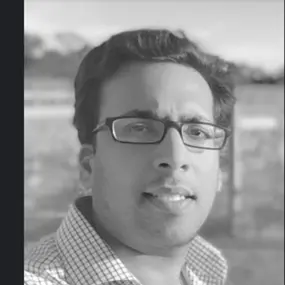
Managing Member / CIO
Vikas (Vik) Mittal is the Managing Member of Meteora Capital, LLC, an alternative investment firm he founded in January 2022, where he deploys capital across event-driven and structured investment strategies. Meteora Capital manages capital across liquid and illiquid investments and has experience throughout the full SPAC lifecycle. Prior to founding Meteora Capital, Mr. Mittal was an investment professional at Glazer Capital, LLC from 2005 to 2021, where he focused on event-driven and structured investments across public and private markets. He began his career in 2002 on the founding team of Raymond James’ Technology, Media & Telecommunications investment banking practice in Palo Alto, California.
Mr. Mittal brings over 20 years of buy-side investing experience as a principal investor and nearly two decades of involvement with special purpose acquisition companies, spanning sponsorship, capital markets and post-combination value creation. He currently serves in leadership roles across several SPACs, including Co-CEO, Chairman and CFO of CSLM Digital Asset Acquisition Corp III, Ltd.; CFO and director of Karman Line Acquisition Corp.; CFO of Berto Acquisition Corp.; Executive Chairman of Berto Acquisition Corp. II; Principal Executive Officer and director of Libity; director of Bitcoin Infrastructure Acquisition Corp.; and CEO and CFO of Invest Acquisition Corporation.