

 Apple Podcasts
 YouTube
 Spotify
 iHeartRadio
 Podchaser
 RSS Feed
 Amazon Music
 Podcast Addict
 PocketCasts
 Deezer
 PlayerFM
 Castro
 Castbox
 Goodpods
 Optimizing for the Investor: Why This VC Became an RIA with Martin Garcia
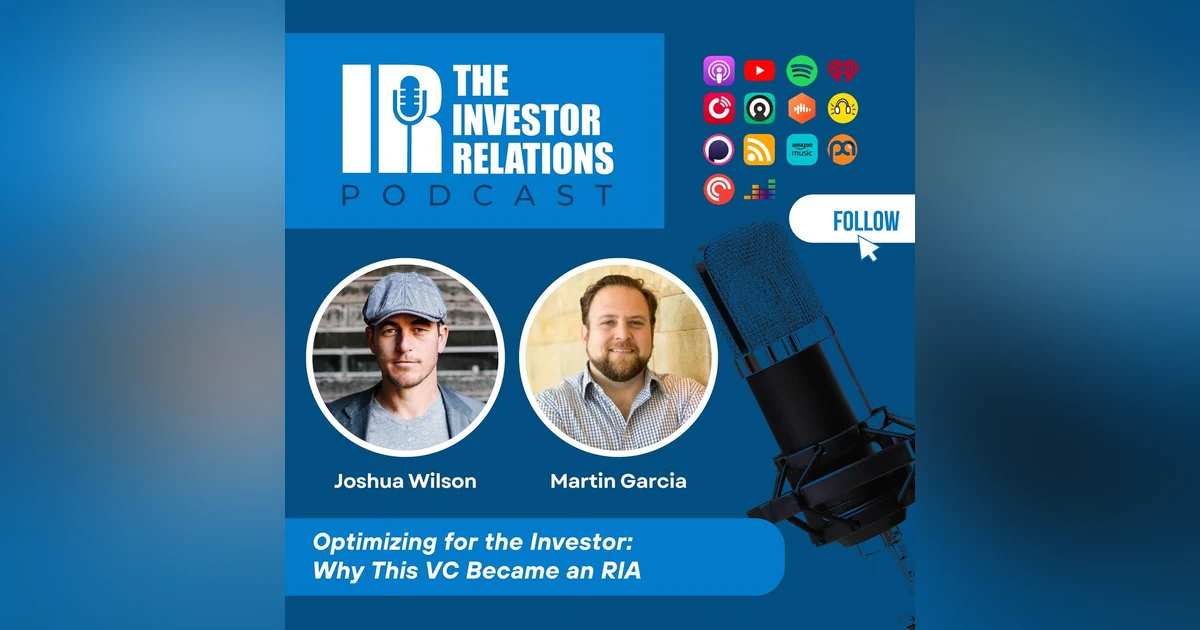
BITKRAFT CFO Martin Garcia on why the gaming and crypto VC became an RIA, and how optimizing the fund itself around investors redefines investor relations.
Most VCs never touch the RIA path. Martin Garcia walked BITKRAFT straight into it — because he decided you cannot properly serve investors at the convergence of gaming and crypto without the flexibility to hold both equity and token warrants. That single structural choice reframes what investor relations actually means: optimizing the fund itself around the people whose capital you steward.
In this episode, Martin Garcia — General Partner, Operating Partner, and CFO at BITKRAFT Ventures — joins host Joshua Wilson to unpack investor relations from both sides of the table. A former LP turned operating partner, Martin brings a fiduciary-first lens shaped by stints at Sozo Ventures, Accuracy, and PwC, plus an MBA from Chicago Booth. The conversation covers global sourcing arbitrage, radical LP transparency, non-dilutive user-acquisition financing, and why fund structure is itself an investor relations strategy for the public and private capital allocators who make up today's evolving shareholder base.
What We Cover:
- Why sitting on both sides of the table sharpens the LP relationship
- The fiduciary mindset: treating LP capital as if it were your own
- How a global remit creates sourcing arbitrage a domestic-only fund cannot match
- The real cost of becoming an RIA — and why BITKRAFT did it anyway
- Equity vs. token warrants: structuring to optimize for the investor
- Radical transparency with LPs, including the write-downs and failed pivots
- Non-dilutive user-acquisition financing and quantitative underwriting
- Venture vs. private credit: two investor conversations, one fiduciary standard
- Why India and Africa sit at the center of the global digital-entertainment thesis
- Interest vs. fit: the mindset that separates venture operators from enterprise builders
Connect with Martin Garcia:
LinkedIn linkedin.com/in/martin-garcia-0a01004
Company BITKRAFT.vc
About the show:
The Investor Relations Podcast is produced by One Iron Network. Learn more at oneironnetwork.com.
Follow The Investor Relations Podcast:
Website theinvestorrelationspodcast.com
LinkedIn linkedin.com/company/the-investor-relations-podcast
YouTube youtube.com/@TheInvestorRelationsPodcast
Disclaimer: Joshua Wilson is a licensed Florida real estate broker and holds FINRA Series 79 and Series 63 licensure. The content of this podcast is for informational and educational purposes only and should not be considered legal, financial, or compliance advice. All views and opinions expressed by the host and guests are their own and do not necessarily reflect the policies or positions of any regulatory agency, organization, or employer. Listeners should consult their own legal counsel, compliance teams, or financial advisors to ensure adherence to applicable regulations, including SEC, FINRA, and other industry-specific requirements. This podcast does not constitute a solicitation or recommendation for any financial products or services.
Let’s Connect on LinkedIn:
https://www.linkedin.com/in/joshuabrucewilson/
To Contact Us, Please Visit:
00:00 - Welcome and Why IR Is About Relationships
01:00 - Meet Martin Garcia: GP, Operating Partner, and CFO at BITKRAFT
03:00 - The Fiduciary Mindset: Treating LP Capital as Your Own
04:00 - Global Remit: How a Worldwide Footprint Creates Sourcing Arbitrage
08:00 - Why Early-Stage VC: Highest Risk, Highest Potential Return
15:00 - Becoming an RIA to Invest in Equity and Tokens
17:00 - What It Means to Invest Improperly
20:00 - Radical Transparency With LPs, Including the Write-Downs
23:00 - The User-Acquisition Fund: Non-Dilutive Growth Capital
29:00 - Quantitative Underwriting: When the Numbers Decide
35:00 - Venture vs. Private Credit: Two Investor Conversations
40:00 - Where to Find Martin and Closing Wisdom
Hey, good day everybody. Welcome to the Investor Relations Podcast. My name's Joshua, and I'm gonna be the host of the, uh, episode today. And, uh, I just… I wanna ask you guys to do me a favor. Before you go in and listen to this whole thing, I'd like you to go to the description box and connect and follow Martin, right? You'll see his LinkedIn connection there. And what, what that will do is as you're listening, you'll be able to put a face with the, the voice, and then, uh, ask questions, follow up, and engage with our guest, right? Like, this is why we do it, to create conversations, right? I'm not trying to be TikTok famous here, what I am trying to do is spark conversation and spark thought. Investor relations, I believe, is all about relationships with investors, right? So on today we're gonna, uh, today's show we're gonna have a conversation with Martin. Now, special shout out to, uh, James Robinson and, and crew for helping set this up. And, uh, we're thankful for the PR firms and IR firms that we work with that, that bring us great guests. Martin, uh, welcome to the Investor Relations Podcast. Thank you for having me. Yeah. Cool. Excited to be here. Yeah. Well, I'm excited you're here with us too. Um, let's start with this. When it comes to investor relations, you sit in a unique spot where you're kind of on both sides of the table simultaneously. Why don't you kind of walk us through what it is you do, sir? Yeah, basically, um, I, I'm one of the GPs. I'm also the operating partner and, um, and wear multiple hats w- within, uh, our firm, which is called BITKRAFT. BITKRAFT is a early-stage VC fund, and we invest in the digital entertainment, gaming, um, space. But we've brought in, and, and I think we'll touch on that as we go forward. But basically, um, to kind of start off and, and to touch on what you said is, is I actually started as an investor in my previous firm and, and observed that, that no one was manning the house, and became the operating partner. Um, so basically effectively running a VC firm. In BITKRAFT as a whole, as I say, uh, joined, um, as the CFO but basically became, uh, the operating partner once again. And, and, and within that, work a little bit on the investment side but also work w- creating or, uh, with all of our different LPs and investors to, to serve, serve their needs and, and their interests. So as you say, being on both sides I think is essential. Yeah. Now, it seems as though everybody's dream is to become an LP, invest money, and actively watch it grow, right? But you go from LP to GP and OP, operating partner and general partner, because, you know, you are kind of the opposite of a passive investor. Like, you saw something and you, you stepped in and you added value through, through work and, and talent. Kinda like, what was that, that pull from active… you know, passive LP to like, "No, I need to get involved here"? Well, it's, it's basically, I, I think a good leader is one that sees that something needs to be done and then goes and does it. And, and so I've always been of, kind of that state of mind. Um, I think, uh, uh, I'll… The way I see it, to do your job well in, in venture capital, the first and foremost thing is that you are a fiduciary person or, or responsibility of other people's capital. And, and I really take that to heart. So when, when we work with different LPs, I always kind of say, "Hey, pretend that's my money. How would I want, want things to happen or how do I want things to, to take place?" Yeah. Absolutely. And, uh, and, um, I know you're traveling and I'm, and I'm grateful for you on the podcast. Yeah. So, like, hello whoever's, uh, walking by and, and hearing in, be- being a part of your, you know, travel, travel crew. Um, I'm, I'm grateful as you… Let's talk about travel. Yeah. As a part of your fund's thesis and a part of your work thesis is this kind of global footprint, global… You, you used the word remit. Kind of explain what that is to me. I, I'm, I'm not familiar with global remit. No, but I th- I think that you're absolutely right. What… We are a US-headquartered US fund structure. Mm-hmm. But the thesis that we invest in, which is gaming, interactive enta- en- entertainment, is an, an inherently a global, um, phenomena. Um, right now some of the best content is actually created in Korea or in China, and not necessarily in, in Hollywood or Southern California. So to properly do our job, which is investing in this, these areas, we have to be a global firm. Um- How does that impact us? We actually have people on the ground all over Europe, India, Singapore, s- uh, South Africa. You name it, we have someone there that helps us properly source and be present, so we understand kind of the nuances in those markets and how that translates in a kind of a global structure and how that could have an impact, let's say, in the US. Um, so, so I think that's really important. And, and, and I think the other thing I think that's really important to talk about is, is it… Having a global structure creates arbitrage opportunities. Um, if you think about it, capital is not evenly distributed globally, uh, relatively to what we consider talent or opportunity. So it does give you kind of an edge, um, sourcing edge compared to a, a, a domestic-only fund. Um, having that ability to, to interact with someone, let's say, in Vietnam, um, "Hey, not only am I providing you this capital, I'm actually put… You know, having our firm invest in you gives you kind of a global presence. It gives you a global impact." And, and that firm now is, uh, that company is now able to target, you know, has a, a much stronger view of things. It, it, it has its negative effects. Um, so we invested in this company in Spain, and, um, they got upset because a lot of their, a lot of their staff actually got poached. Um, they were actually, uh, they didn't realize how, how, in a global market, how little they were paying their staff. People were aware of what they were doing and, and actually were like, "Oh, I can actually acquire some of this talent." So it has its negatives, but overall, I think it's, it's genuinely positive. And as I say, it creates, um, uh, some moments of arbitrage for us because it allows us to, to basically, um, get better access at better economic terms, which ultimately will drive returns to our investors. Right. Yeah, super cool. So, um, being a global remit, being, you know, a, um, a learner of different cultures, um, how many languages do you, do you speak? No, I, I, I'm, I'm basically half Spanish, half American, so I speak those two very, very well. And, and Portuguese is something you kind of pick up if, if you know Spanish. Yeah. Um, so I, I do spend s- quite a bit of time in Portugal. So, so I would say those are, are my three languages. Now, can I understand French? Yeah. Um, can I speak… You know, if I'm a couple weeks in Italy, can I kind of dabble and, and say what I need to say to get my beers? Uh, definitely. Yeah. There's a, uh, I'm gonna send this in the chat, so take a, take a look at the word. If I totally missed the mark… Now, I was, I, I, I was trying to practice how to say it, but it's a, it's a Portuguese saying. Uh, are you familiar with it? Uh, yeah. Okay. What it, do, could you pronounce it for me? And if not, if not, 'cause I might have spelt it wrong. If not, uh, I might have just completely missed the mark here. Quem não arrisca, não pes- petisca, which is basically who doesn't risk, doesn't earn or doesn't get anything out of it. Yeah. Who doesn't risk, doesn't earn. And as I was studying, you know, like, I wa- I was trying to, like, learn about different cultures and I was just like, "What are some Portuguese sayings?" And it's like, "Those two do not risk do not eat a snack," right? Y- yeah, don't get- Don't get food. Yeah, exactly. Uh, so with, with that, you know, like, talk to us about, you know, the, the model of VC and why you chose, you know, that model from… You know, you could have chosen private equity. You could have chosen, you know, stocks and bonds. You could have chosen, you know, IPOs or you could have chosen many different things. Why did you choose, uh, that which the world might see that as a risky thing, early stage in VC? Uh, uh, definitely. Um, I would say within the alt space- Mm-hmm venture capital is, is the highest risk area. Um, but is, uh, it is also, you know, as you well point out, highest risk, um, actually highest potential return also. Um, so you're looking for those outliers and, and if you think you have a good thesis and you can actually capture those good opportunities, I think it is, uh, a really good space to be in. Um, additionally, I think, you know, there is a lot of beauty of working with entrepreneurs and, and, and seeing where the needs are in, in our society and how we can fulfill them and, and actually growing towards those and, and filling those, those problems are, are really good. Um, you know, so for me it's, it's really interesting to, to actually invest in things that, that can have an impact. You're not the third asphalt company that you're doing a roll-up. Um, you're actually investing in companies that, that are looking to be transformative to different industries. Um- You know, I think that's, those are some of the things that, that really call to me, and I think it makes, makes my job very interesting. Um, versus, versus, as I say, doing something which is, is yes, more… less risky, more assured. Um, but that return also doesn't have the ability to scale as, as well as the venture returns do. Right. And, and, and hon- and honestly, I do think that many, many LPs when they look to diversify their, their portfolio or their, you know, their, their wealth, will put money into venture because they, they also see that up outsized return. I think- Right … um, you know, there, there, it, it, the last dec- decade has been a challenge in terms of, of actual DPI of returning the capital that, that, that, um, funds have invested. But ultimately I think the, the industry is sound in the se- in the sense that, that y- it is transformative, it is creating, uh, new businesses, it is creating new industries and, and, um, when, when there is more liquidity, you are going to see the, the, this is a, a very, very attractive, um, area to invest long-term. Yeah. You, you had, um, you had an interesting phrase in there. You said it calls to you. Mm-hmm. Right? And- Mm-hmm … you know, I think, you know, when, when we study like investor relations and investor sentiment, you know, affinity, like what are people like pulled towards, called towards? Like, you know, for example, you know, like you, you in gaming and arts and, you know, digital studio stuff, like why do you think that calls to you and, and what does that, what's that mean from an invest- an investor spec- uh, perspective? I, I mean, I think ultimately, and, and it's a good point that you point out, everyone that works in my firm has to be entrepreneurial in some sense. If you're not entrepreneurial, this isn't the industry for you. Um, even, even in a venture capital firm. A venture capital firm ultimately is a s- usually tends to be a small group. I mean, there are some very big VC firms, but usually they're very small groups and, and they have very kind of a, a, a scrappy approach. Um, "Hey, where's the pain? How do we solve for it? How do we find the companies? How do we make our investments better?" So I think ultimately more than, than, "Hey, is it gaming?" It, it, it… Your mentality, because you can, you can have an interest in games and, and go work for Sony or go work for a large publisher. But ultimately, more importantly, it's, it's kind of that, "Hey, I wanna have that-" That ability to impact what I do. I don't wanna be one small clog, you know, within a, a giant machine. I actually wanna be, you know, the, the, the head or the, the ability to, to impact what I'm doing and, and how that, that translates to the firm or what I'm doing. I think that's, that's more important than, than, than, than your interest in the space. I think ultimately you do have to have that interest in the space because that's gonna make you a much better investor, but, but, um, but you also have to have that, that scrappiness. Um, you know, when you talk about investor relations, when w- when you look to hire people to help you out in investor relations, it's actually one of the biggest issues is usually these people tend to look for security. And in the venture space, uh, you know, uh, it's a much… You, you need to perform and, and, and, and, and you need to be able to produce very quickly. So, so it tends to weed out people that are- aren't comfortable with, with that kind of approach. Yeah. Uh, so when it comes to interest and fit is what I heard, right? Mm-hmm. When getting into venture versus something else, right? An interest would be like, "Hey, I have an affinity towards the gaming industry entertainment," right? Like, "I like it. I grew up-" Correct."… with, you know, Sega Genesis, TurboGrafx-16," or whatever the case may be, right? The, the fit is at what stage of the company are you a good fit in? Are you entrepreneurial? Can you kind of go in from zero to one? Can you, can you build that out? Exactly. Or are you more of a enterprise person where you need systems, processes, a lot of people to man… Like, you're not gonna have your fit in a entrepreneurial seat, and it's gonna drive you nuts, versus you try to put me in an enterprise spot, it'll drive me nuts. Too much bureaucracy. Exactly. Like, I, I move fast. I'm nimble. I'm… You know what I mean? So, like, you found your fit and your affinity. Describe to me… I was just talking to this with one of my clients the other day. Describe to me a time when recently when you found yourself in flow, where time kind of, like, evaporated and you, like, time just missed in work. Like, where you're like,"Whoa, where did time go?" Well, you're not going … It, it worked for me. It got me in flow. For most people it would be a nightmare. But, um, basically, uh, within our industry, one thing that we observed was, was the convergence of blockchain technology and the gaming space. Both are kind of live in a virtual space. And to be able to properly invest in that space, we have to actually translate our firm from being an exempt organization, which most VCs are, to be a registered investment advisor. That is, um, a tall order for most VCs. It is an extremely tall order for a very small venture capital firm. Less than 20 people at the time. And so for us to be able to do that, you basically needed to be in that state of flow to actually get through all the requirements, all the necessities, and, and actually become a registered investment advisor. But this is one of the things I was kind of alluding to earlier, that to be able to properly You know, we became an RIA because we knew that to be able to do our job well, we needed to have the ability to invest not only in private companies, but also in full token portion of a company that's doing crypto. Um, we needed the ability to… More flexibility, and that flexibility ul- ultimately helps our LP base. Um- Yeah … a- and, and yes, it's, it's painful, horrible. It's something that, that I don't wish anyone to do, but if you don't do it, it's gonna be a struggle for you to properly invest. I think that's something that, that we observe. Yeah. P- properly invest, 'cause you might have these, uh… You can invest improperly. Let, let's start with this. Yeah. What does it look like to invest improperly, with, through someone, into something? W- what have you seen improperly done, through your opinion? Well, yeah, yeah, just using that, that same example. Um, so one of the th- so investing in companies that have some form, shape, way or form within the crypto space, to properly invest you usually want to be able to buy equity and token warrants, i.e. if you ever launch tokens, you owe me a portion of those tokens that you're, you're going to launch. Now, what I've found, and this industry changes, you know, the crypto space, uh, is kind of like dog years. One year, one year in crypto is like seven years in, in, in the rest of the world. But to properly, you know… What I've found, um, historically is that some firms were created offshore and could only invest in the token portion. Some firms weren't RIAs and could only invest in the equity portion. Equity portion of that. So, so, so you, you find that they're not optimizing for the investor. Um, if you only invest in the cryp- in the token portion, and the token goes to zero but the company still has value, you can still get money out of the equity side of the business. Um, similarly, hey, if you only invest in the equity portion and then the, the token actually appreciates greatly, and you can't exit from that, you can't get any liquidity, you're kind of stuck. So, so as I say, to properly do it, you have to be able to do both. Um- Yeah, I, I love this. Optimizing for investors as a part of a relationship, investor relations, reve- relationships with investors. To have a, an effective, efficient relationship with investors, sometimes we must change the way we do things. Mm-hmm. Sometimes we need to optimize and, like, who are we serving here? Exactly. Are we serving the investors? And if you're a fiduciary, your job is to serve the investor, right? Right. Right. And if you're optimizing and serving the investor, optimizing for that, and sometimes structure is the, the, the way to do that. So you went through the process of becoming an RIA, which in itself most people will never start an, a VC fund and go through that process of raising capital, setting up the structure, taking the risk there. Very few people I've ever seen go RIA as well. Correct. When did you notice that? No, when did I notice? I, I mean, I think, I, I think one of the things that, that we, you know, as investors, kind of to your first question, um, way back when, which was, hey, you know, this bilateral you're investing but you're also getting investors. I mean, I think one of the things that we really believe is, and is that you really have to have the same… You know, we ask our founders, "Please be transparent with us. Please share kind of the good and the bad and, and don't keep things hidden." Yeah. Um, and, and, and we basically do the same thing to, to, to our LPs. Um, we d- uh, we demand the same standards. So we will be very transparent."Hey, this company didn't work out. We had marked it up earlier, but, um, that, the latest pivot was at, an actual disaster." And w- and, and I think being very transparent is, is, is, is, is essential, um, to, to that relationship with the LP. So, "Hey, this didn't work out." And, and most, I would call it most, um- Mature LPs will say,"Hey, thank you for explaining it. You know, my, my understanding was this is a high-risk asset, so we know that not everything's gonna work out." So being able to be that transparent is, is I think key to establishing that, that strong, how would I say it? That strong relationship with, with, um, with the LP. To just say, "Hey, this is how it is and, and this is what it is." And then as, as kind of as time progresses, you go, "Hey, if we're going to be investing at this convergence of gaming and crypto, to be able to do it, we have to follow, you know, we have to get the RA." We did that. Um, we're looking now at investing more and more in India. India is an extremely hot, hot indust- uh, geography for, um, digital entertainment. Why? Because the Indian population is extremely young. It is growing fast. Their, their, uh, ability to consume, their, their disposable income is increasing. It has all the kind of key factors for an explosion in digital, um, content coming, coming out of India. Um, and so to properly do that, we have to do, um, a lot of, a lot of different, um We have to jump through a lot of hoops, let's put it that way. Yeah. I, I, I, I, I'll, I'll tell you, I, I talked to a lawyer, um, when I was doing a deal in India and, you know, he goes,"Hey, you know what, what India stands for in, in, in, in, in our law firm? I'll never do it again- … because it's so painful." But hey, if you wanna be… If, if our job is to invest in the best companies and those companies appear out of India, we have to properly do that. And so that's our job. Um, and, and we'll do what, what is needed and, and explain to, to our investors,"Hey, we're doing this, and here are the risks, and here are the downsides, and but here's the upside, and we think it's, it's well worth it. And you're paying us to, to make these decisions." So I think that's, that's the key. Yeah. Man, this is cool. One of my favorite parts, and I learned this from a, um… Man, I really wish I, I remember who said this, but there was, um, there's this PIRATES metrics, which is A-A-R-R-R, and it, and it explains kind of like the growth model. So it's PIRATES metrics. I forget who wrote it, so forgive me, guys, for attribution, but it's, you know, acquisition, activation, uh, referral re- retention, and, um, revenue, referral, retention, right? Anyways, it's the growth model and they call it the PIRATES metrics because it spells out ARR. You guys have a very… Thanks. I love pirates, by the way. Uh, you have a very interesting business model, which I think has a competitive edge there potentially, where you guys focus on the, the acquisition and activation piece as a fund thesis, right? And you guys call it the UA fund, right? Yes. It's, it's, it's growth capital. It's, it's, it's capital for companies to, to, to scale. Um, and, and, and let me kind of, if I may- Please… fir- first describe how So basically, we have a bunch of our own portfolio companies where they are actually doing very well. They've grown significantly, but they can… But- In today's market where AI is the hot topic and consumer media is not hot and trendy, they're, they actually have a challenge raising capital. Or they, they can raise it, but it's extremely dilutive to, to the founders. So one thing that, that we saw was, hey, this company has product market fit. All that it needs to do to continue to grow is have more capital so that it can, it can do digital marketing, it can, it can advertise itself and get more users. Um, and, and so why not have a product that allows them to… Uh, let's call it a debt product whereby, hey, um, we'll give you that financing because we can actually with, with, um, a different set of algorithms with past, um, cohort behavior, we can actually go, hey, the lifetime, the, the… I spend $100 and I actually recuperate that within three months. So why wouldn't we lend a, a, um, the company that capital? Because it'll just let them scale. Um, so, so it's something that we actually have been doing out of our own balance sheet. Um, the founders love it because as, as I say, it's non-dilutive. Yeah. It actually provides a very high interest rate, so for, um, the investors it, it provides venture style returns but without the necessary risk. Um, so we're looking at, at usually around High teens, low 20 type, uh, uh, returns of IR, which is phenomenal. And, and, and it's basically a win-win, but it started… And, and I think this is the key, it started from observing the need of our own companies and not just providing money. How can we help you? Okay, well, hey, here's a company that is doing very well. It has a product that people like, but it just doesn't have the financial ability to grow. So let's provide that, that ability to grow, um, and we find a way where we can actually get a very nice return out of it. So, so as I say, it, it's a, it's a interesting product that, that is very well suited for the times. Um, and I think it's here, it's a product here to stay. Um, it's not only for gaming, it's for anything that, that basically advertises online, so you have a lot of user information. So hey, um, think of subscriptions, online subscriptions. Think of, of basically any type of, of services or any type of, of app that you download and, and utilize. Um, at, at the end of the day, these companies, their best way of marketing is, is, is online, and that might be through influencers, it might be through ads. But ultimately they need to, to reach out and, and, and market their product, and we can actually see how quickly money spent in, in digital advertising, how quickly it gets returned. And from there make the, the business decision to make them grow. So it's, as I say, it's a phenomenal product. It, it's, it's one that's extremely well-received. We've been doing it for just shy of a year and, and helped, um, a number of our own portfolio, but also a number of, of other companies that are not even in the digital entertainment space to, to scale. So, so as I say, extremely, extremely interesting So you'll go outside of your fun- or your, your portfolio with this, with this, uh, sh- with this product. Let me, let me ask some questions around that- Sure … if you don't mind. I understand, right, hey, we deployed a bunch of capital in, in this portfolio, right? We know them, we're studying their metrics, we get those reports. Like, we, we know how they're performing and the growth trajectory. It makes sense for me to go, "Cool. Let us, let us put some money here together towards customer acquisition." External, you, you know, like, how do you go about getting to know the team, knowing the risk, knowing their, you know, making sure their metrics are good?'Cause you have to know your numbers so dang good if you're gonna be, you know, the lifetime value of the customer, the cost of acquisition of the customer, how long they're gonna stick around, their stickiness. You know, like, there's so much to know. How do you get that feel when you first meet them? What's, what's interesting, um, what, what's interesting in this type of product- Yeah I don't really need to know the team. I, I do need to know them. I n- need to know that they're- Right … they're, they're trustworthy and transparent. But ultimately, this is not… When we make an investment or when we, we basically, uh, uh, lend money to these companies, it is a quantitative instead of qualitative invest- uh, IC, investment committee decision. So it ultimately it's not like,"Hey, do I believe that this works?" No, I actually look at the data. So, um, guy who's, who's running this, this fund from us is, is called Jerry Yee. He was the head of data scientists, um, for Lightspeed Ventures. And so all it is is grabbing all the data and saying, "Hey, I consistently can predict that, that this, you know, spending will, spending user acquisition financing at this amount will be returned within, you know, three months." And, and We have never missed the mark on that. So first we basically go, "Hey, this makes sense from, from I spend money and I get users, and those users pay back." The second thing that we do is actually look at their financials and go, "Hey, do they have the ability to… You know, do they have the runway to pay us back as they ke- continue to scale?" And third, it's, it's, "Hey, will they agree to our legal framework with, which gives us our guardrails and our protections?" If those three things check out, I can lend to them. Um, it, it's not like, hey, do I believe that, you know, this idea actually works. And I can't give… You know, I can't disclose completely, but, like, for example, there was a company that we looked at from the, the, from the venture side of things. Hey, we didn't believe that the company had a strong enough moat to actually have, you know, for us to invest long term. We don't think this company will become the next Google. We don't, you know. But from a user acquisition profile, it's excellent. They, they, they have a product that's very well received, that they spend money and they get their mon- you know, within a year they've gotten 3X what they invested. So why wouldn't I invest in that from a user acquisition, uh, point of view? So to your point, like, like We've helped our portfolio companies. The best example is we have one portfolio company, um, that was doing about two, three million in sales. Within six months of, of us helping them, they're now doing about 15 million in sales. Um- Wow. Cool… and, and, and they're cashflow positive. And so, so they no longer have the necessity to fundraise. How is that good for my investors in the, in the venture side? It's not, since they don't have to fundraise, they're, or the investor's not going, or our firm, our venture f- firm is not going to get diluted. Right. We've allowed this company to grow and not get, we don't dilute ourselves. So it's kind of, as I say, win-win for everyone. But as I say, it, it, it's not a do I like the founder? No. It's do the numbers work? Yes, the numbers work, then yes, we can invest. So it's, it, it's a very, you, you basically have to change y- your head space and how you look at things. And in fact, you know, one of the things we do is they're very separate teams. The, the venture side is one team and, and the user acquisition team is, is completely dis- distinct, um, and basically work without kind of sharing certain data. We do say, "Hey, this is something you could look at," or, "Hey, this might be interesting for you." But, but to an extent that's, that's where the, our limit of, of sharing info- or information dies. Well, I think that, I think that it's interesting because when we talked about affinity and desire, right? Like what do I like- Mm-hmm … versus, you know, where's my fit? The r- the r- the person you want writing the risk profile on a debt piece is a different person you want writing the profile on a venture piece, right? Correct. Yes. They're two different mindsets of people. One is, you know, like, will I get paid? Versus the other person is how much risk can we take versus how much reward? You know, like there's just a different lens that we're looking through for those different products, right? Well, and it's also like within venture you do your diligence, but it's still very much a, an art, not a science. Um, hey, have I seen this pattern recognition? Is this something that I've seen before? Does this make sense? Does what… Has he, has the founder performed in the past? And, and it tends to be, let's, uh, in our case, we invest extremely early, so it might be before the product market fit, before that, that, that they can prove, hey, it, it works. So now in the user acquisition, I don't, you know, I need a, a, the, you know, the risk is very different. It's, hey- Yeah … can it pay back? And, and it, as you say, it's a very different profile of person that has to make that assessment. Yeah. Man, I'm so fascinated by your, by your work and your, and your path. I love hearing how people got there too. I love seeing different business models and how different conversations are going. Let me ask one of the… Uh, we have to wrap it up in a minute. Sure. I'd like more time with you in the future, 'cause this is fun. But we're running out of time. When it comes to the different levels of, or the different investor types Talk, give us a, an idea on investor relations strategy to talk about venture versus talking about a debt product. Are there different audiences for that? Is there a different conversation for that? What have you experienced? Yeah, it's, it's a really good question. I think, um, it- It can be the same person. Mm-hmm. It can be someone is interested in venture, um, for a certain type of risk profile. Mm-hmm. Um, but they'd also can be very much interested in this product. Now, you can find people that will say, "Hey, I don't want ventures. Too much risk. I don't h- I'm not looking for that appetite. Um, but something that's more debt is less risky, I'm much more interested in that." Um, I would say in general, v- venture tends to be, especially in the high net worth individual, um, tends to be much more as you were calling it, an affinity."Hey, this resonates. I, I, I believe in this industry growing. I believe in this happening." Now, just like I was describing how we invest in, in private credit, I think the, uh, w- the investor, you know, the LP in private credit takes kind of a similar stance as it's not so much that affinity towards the industry, it's more, hey, does this, you know, do the numbers check out? Do the numbers, yeah. Be- because ultimately, venture is a bet. Um, and you don't know, you know, one vintage can work out very well, another vintage might not work out quite as well. Um, you know, you, you just didn't, you didn't do the right, you know, you didn't pick the right company. Is the company, you know, timing, I think is, is the biggest indicator of, of success within venture. But in a debt product, ultimately it's more like, "Hey, do you have defaults?" "No, I don't." Um, you know, "What's the return profile? Is that sustainable over time?" And, and, and so it's a very different kind of context, but ultimately, I think, I think it, it should appeal to the same, same user, um, overall. Yeah. Fun question. Not that these are not fun. Okay. I thought they were fun. What was your favorite video game of all time, either as a kid or as an adult? Like, what was your favorite video game you've ever played? Ah, that's a challenging one. Um, I'll, I'll s- I'll state a couple- Uh-huh… that, that, that kind of date me. Um, Oregon Trail. Do you know what Oregon Trail is? Yes. On the floppy. Everybody- Yes, yes… did this during class. It… I love that game. It was like, I, I, I enjoy history, so I thought it was phenomenal. Yeah. Um, and, and then there was another game called California Games. I don't know if you remember that one. I don't remember that one, but I do remember- It, it, it- Oregon Trail… Oregon Trail was one that I th- like, to the computer lab to be able to like, you know, skipping class to, to go play Oregon Trail, and so I always kind of bring that one up. Yeah. Um, so th- that one's always been one of my favorite, and I'm always looking for that type of, of, you know… I have four kids. It's trying to like, okay, yeah, um, you know, another shooting game. Okay, great. But let's do something a little bit more, you know, like build a community, do, you know- construct and learn, so- Yeah… so some of these games that, that, history or what have you, I find much more c- compelling and entertaining. Yeah. The, the learning and the journey and the challenge, w- like Oregon Trail, what a great example. You would learn something, and then you would face a problem. You have a broken wagon wheel. You have, you know- Exactly … this person's sick. A, a raid is coming. You have to protect… You know, like it was so fun. It's an adventure, but it, it brought in learning. Um- And, and think how simple the game was- So simple … you know, to, i- in today's world, how simple it was, but it was very, very entertaining. Yeah. So I, I think, I think that's one of the important things that we have to observe is, it's a lot of games, um, especially some of these viral games that become very, very popular, are very simple games. It's, it's, it's a matter of how fun and engaging it is. It's not all about the graphics and how in depth it can be. It's just making sure that, that, that there's that entertainment value, right? Right. Yeah, man. So cool. Wow. Uh, Martin, where could people go… So, uh, in the beginning I gave them a call to action to go find your name in the, in the- Yeah uh, LinkedIn profile. But, like, is there a spot where you're like, "Hey, if you guys wanna know more about what we're doing, what we're up to, or see some of our content," what's… where's a, where's a good spot for that? Well, I think, I think m- the best place to take a look is, is our website. It's- Okay … it's a unique, um, uh… It, it's very unique in the sense, um, how it's structured and, and it kinda plays to what we invest in. But it's- Yeah … basically BITKRAFT, B-I-T-K-R-A-F-T.vc. Okay. Um, but yeah, I, I, I'm always open to talk to anyone that's interested in kinda what we do and how we do it. And I think as I say, I, I, I believe in doing it right. And, and so, so if people value that, that's, that's, you know, we're the people to come and talk to. Cool. Martin, are there any questions that I probably should have asked you that you're like, "Josh, I can't believe you screwed this up and didn't ask me that"? No, not at all. I mean, I think, I think, uh, it's all pretty well covered. I think, um, you know, I think the, the part that, that, that I'd love to I, I hope came across as the importance of having kind of that global view of the world and, and kind of saying, "Hey, everything that we think is, is the norm here might not be the norm somewhere else." And, and, and that creates opportunities. Having that flexibility to, to actually learn about different cultures and what's happening in different countries. As I say, India, I, I brought up as an example of, of a booming economy and a booming market. Um, and, and, and having that kind of vision. I mean, I think Africa in the coming years will be a, a- the next frontier just because of population growth and, and youth and, and ability to… And disposable income. So it's, it's, it's having… You know, I'm spending a lot of time trying to focus more and more of my time in, in Africa. I just think it's a, an interesting place to, to, to take a look at. I, I still haven't found many investment opportunities there, to be completely honest and transparent, but, but I think that, that when you look at the future, you kind of have to not envision what we know, but where, where that energy and that youth will drive innovation. And, and as I say, I think you kind of have to have that mentality of it might not be your backyard, it might be someone else's backyard. So cool. Give one resource or strategy or maybe some wisdom to the audience of you think, you know, like, people should just maybe pay attention to this or take a look at this. Uh, I would, I, what I would recommend is for people to spend some time with observ- without coaching your child or without coaching a, a, a young adult, but see how they spend their digital time. Yeah. Because it's very different than what, what a mature adult, um, maybe I'm, I'm once again dating myself, but like I, I learn so much from, from, from our youth. And, and I would just recommend that people, you know, without coaching them,"Hey, what are you doing? What interests you?" And, and you'll find out the, the, the, some very interesting kind of applications or some very interesting ways of, of looking at, at life. Yeah. So cool. We can learn a lot from observation and questioning. Exactly. Exactly. We don't learn when we're talking. Guys, I hope you all have a incredible day. Thanks for listening in to this episode of the Investor Relations Podcast. Our guest's contact information will be in the show notes below. I hope you guys are enjoying these. Uh, keep coming with your questions. Keep coming with your thoughts on what we should discuss, and topics of the, the investor communities that are, that are going around right now. And if maybe you're, you wanna be a guest, or you're an IR firm or a PR firm that you have a good potential guest, like Martin was today, head over to the investorrelationspodcast.com. Fill out a quick form. Maybe get you on the show. Till then, see you guys.
CFO
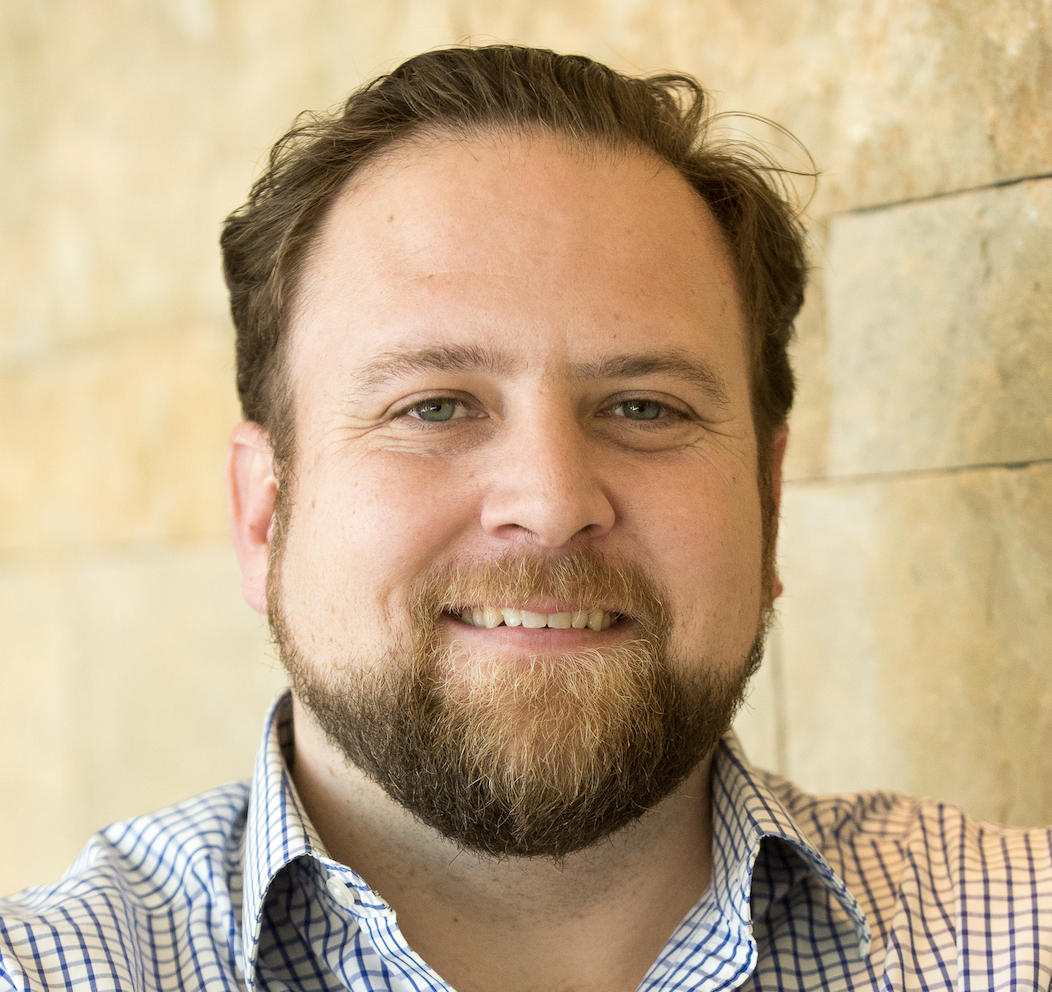
Martin Garcia is an experienced operating partner with a demonstrated history of working in the venture capital and private equity industry. Skilled in Management, Mergers & Acquisitions (M&A), Corporate Finance, Strategic Planning, and Valuation, Garcia is an ideal mix with a strong entrepreneurship background with long stints at Sozo Ventures, Accuracy and PriceWaterhouseCoopers and extensive business education. He's a graduate from the University of Chicago Booth School of Business, with a Master of Business Administration (MBA) focused in entrepreneurship and finance .