

 Apple Podcasts
 YouTube
 Spotify
 iHeartRadio
 Podchaser
 RSS Feed
 Amazon Music
 Podcast Addict
 PocketCasts
 Deezer
 PlayerFM
 Castro
 Castbox
 Goodpods
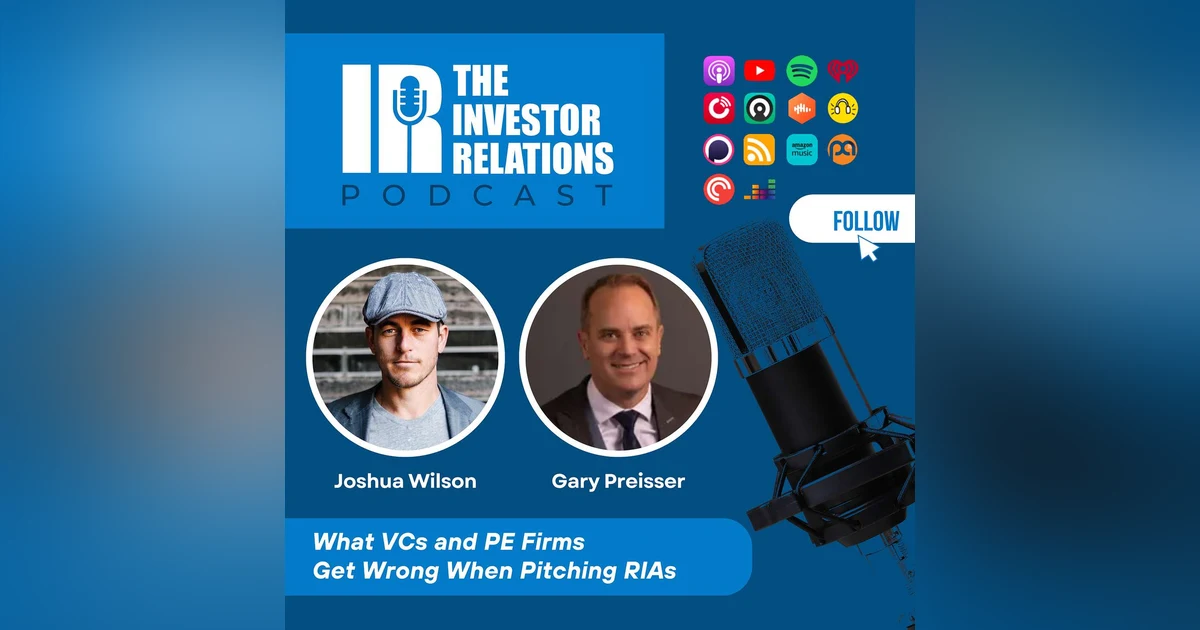
 What VCs and PE Firms Get Wrong When Pitching RIAs with Gary Preisser
"What if I gave you a piece of my portfolio to manage?" Early in his career, Gary Preisser tried to answer that. Now he knows the only right response is a question: What is the money for, and when will you need it?
EPISODE SUMMARY Gary Preisser, Managing Partner and co-founder of Stonebriar Wealth Advisors, joins Joshua Wilson for a sharp conversation on how registered investment advisors actually evaluate private equity, private credit, and venture capital for high-net-worth families. Drawing on 23+ years across accounting, tax planning, and wealth management, Gary explains why purpose and timing — not growth alone — determine whether an investment fits, how capital raisers can engage RIAs without triggering resistance, and why "functional wealth" beats accumulation. A practical listen for IR professionals, fund managers, and capital markets advisors targeting the RIA channel.
What We Cover: 🎯 Why assets are tools, not trophies — and what "functional wealth" really means 🎯 The question every RIA asks before allocating: what is the money for? 🎯 How RIAs weigh private equity, private credit, and VC for client portfolios 🎯 The Cash Flow Clock framework for timing, liquidity, and volatility 🎯 Why a great investment at the wrong time is no longer a great investment 🎯 Tax alpha and asset location — the net-vs-gross mistake most portfolios make 🎯 How fund managers should approach RIAs the right way (and what kills the deal) 🎯 Why exclusivity and clear value-add open the RIA channel 🎯 The partnership mindset that turns one allocation into a long-term relationship 🎯 Inside the fractional family office model
Connect with Gary Preisser: Website https://www.stonebriarwealthadvisors.com LinkedIn https://www.linkedin.com/in/garypreisser
About the show: The Investor Relations Podcast is produced by One Iron Network. Learn more at oneironnetwork.com.
Follow The Investor Relations Podcast: Website theinvestorrelationspodcast.com LinkedIn linkedin.com/company/the-investor-relations-podcast YouTube youtube.com/@TheInvestorRelationsPodcast
Disclaimer: Joshua Wilson is a licensed Florida real estate broker and holds FINRA Series 79 and Series 63 licensure. The content of this podcast is for informational and educational purposes only and should not be considered legal, financial, or compliance advice. All views and opinions expressed by the host and guests are their own and do not necessarily reflect the policies or positions of any regulatory agency, organization, or employer. Listeners should consult their own legal counsel, compliance teams, or financial advisors to ensure adherence to applicable regulations, including SEC, FINRA, and other industry-specific requirements. This podcast does not constitute a solicitation or recommendation for any financial products or services.
Let’s Connect on LinkedIn:
https://www.linkedin.com/in/joshuabrucewilson/
To Contact Us, Please Visit:
00:00 - Intro: The guest who asked how to make it a win
02:30 - Who Gary Preisser is and what Stonebriar does
03:45 - Growth vs. function: assets are tools, not trophies
06:20 - Connecting RIAs and investor relations
09:10 - Where first-time alternative investments go wrong
13:40 - Purpose and timing: the questions before any allocation
18:15 - Tax, net vs. gross, and why feelings don't design a plan
24:30 - The Cash Flow Clock framework
30:00 - Why sports teams behave differently as an asset
34:20 - The Differentiators of Wealth: alpha and asset location
39:30 - How VCs and PE firms should approach RIAs the right way
42:00 - Where to connect with Gary and close
Joshua Wilson:
Hey, good day, everybody. Welcome to the Investor Relations podcast. this show is about relationships with investors. Investor relations, that's all it is. Don't make it more complicated than it has to be. And I'm on a call with Gary, and let me just honor him for this. We've done about 2,300 interviews over the years of doing this, and there's a handful of people who have asked this question to the podcast host, "Hey, man, how can I make this a win for you?" Gary's one of those five, maybe 10. So if you're gonna jump on a podcast somewhere, ask that question, learn from Gary, and meet Gary. His contact information will be in the show notes. You're gonna wanna connect with a guy like this, who thinks about adding value before even taking it. So Gary, I'm honored to have you. Welcome to the show.
Gary Preisser:
Thanks so much for having me. I'm, I appreciate being here.
Joshua Wilson:
Yeah, man. All right. Gary, who are you and what do you do?
Gary Preisser:
I'm the co-founder of Stonebriar Wealth Advisors. We are an RIA, a registered investment advisory, based out of, just south of Salt Lake, Utah. I'm originally from Orlando, spent some time in California, but, we started here in Utah about four and a half years ago and have, grown our RIA, servicing really from a holistic standpoint, individuals, trying to, help their wealth function. Not just grow, but actually function for them.
Joshua Wilson:
What's the difference between growth and function? What do you mean by that?
Gary Preisser:
in a lot of cases, we, we talk about wealth just growing, accumulation. That's the focus in our industry. But every dollar that we have is meant to be used at some point in time by somebody for some reason. And so we have to start from that standpoint. It is not simply to grow. I like to say that assets are not trophies. We don't just show them off, "Look at what I have." They're tools. Their only value is in how they are used. And unfortunately, I think in our industry, the focus is only on growth, accumulation, and that's it, as opposed to saying, "Is this money gonna be available for when we need to actually use it?"
Joshua Wilson:
When we need and how we need it. Now, when you're working with wealthy families, we're gonna get into the how does RIA and investor relations even connect? So we'll connect those- Yes … thoughts soon. For the audience listening, they're gonna go, "Why are we talking to an RIA group about investor relations?" We'll get to that, ladies and gentlemen. But, when we're talking about assets are not trophies, let's talk about that for a second, 'cause when sometimes I see assets with people's names on it on the side of buildings, on the side of libraries and schools, and- Isn't that a trophy, before we get into the IR piece of this?
Gary Preisser:
it certainly can be. You can see it that way. It can be a vanity project. But I hope, at least in most cases, that they are putting names on buildings because there was a specific purpose for that asset to add value to the community, to that university, to whatever that, to that industry, to that area of research, something that they were passionate about that added value, that adds value to them, to their family, and everyone around it. Now, I know that there's too many vanity projects out there, and it's just showing off. But, I believe that for most people, the goal is to add value, whether that is simply setting up a 529 plan for your grandchild or putting a name on a building at a prestigious university. Whatever the case may be, if we don't understand what that purpose is, it's impossible to create a wealth plan that actually functions towards that.
Joshua Wilson:
Cool. All right. Now let's get into the IR piece of this conversation. Wealth and, assets are tools to be used. I think sometimes people, might grow up in construction, right? As an example. They built a successful construction company. They had an exit. They've got tools that they've never used before. They know how- Yes … they know how to use a hammer, a screwdriver, and a pickup truck, right? But now they have wealth tools, and they don't know how to use these tools. Now we could talk about, let's leave on the table stocks, bonds, those kind of things. Let's talk about- Sure maybe the tools of, the alternative markets or venture capital or private investments or those kind of tools that, that these people might experience for the first time and have no clue how to use it
Gary Preisser:
And these tools are so important, and they're s- you're right, they're so new even for those that, that have been around for a long time. We're used to stocks and bonds and mutual funds and those types of things. But the reality is to really create a functional plan, we need true diversification. True diversification is not having more of the same type of thing. It is having different things. One of the investments that some of my clients have is that they're invested in professional sports teams, which is not necessarily a better or worse investment, it's a different investment. A lot of people talked about the Los Angeles Lakers being sold for $10 billion, and what a great investment that was for Jerry Buss, who invested$56 million in 1978 or whatever it was. But now if you look at it, if he had put that money in the S&P, he would've had $12 billion. So it's not necessarily that it was a better investment, but it act- it definitely behaved very differently than, the stock market would. And these, tools that you're talking about, this private equity, private credit, venture capital, these give us true diversification and especially if they are providing functional wealth. If they're giving us an opportunity to do things differently as it moves us towards our purpose, then we need to incorporate these into any financial plan, no matter what your net, net worth is, and it requires education, understanding the pros and cons, the trade-offs of every option that's out there, but always looking at it through the lens of does this help me move towards my purpose or away from it?
Joshua Wilson:
So when you're working with a business owner, how do they know their purpose and how do they know their purpose with their money? Walk me through that.' Gary Preisser: Cause it, ideally, we'd and for our personal life be exactly the same, and that's not always the case. I know some of, a lot of you out there, you own businesses for the purpose of earning money so that you can fulfill the purpose for the rest of your life, your personal, financial, or your personal, your spiritual, your emotional lives. Some of us, for me, I love talking about this stuff all the time. I'm very fortunate that my business is my purpose at the same time, and it spills over into all aspects of my life. But for a business owner, if the purpose is not being fulfilled by your act- back to, by your business- then the key is, what is the purpose? Have you asked that question? I ask that question of my clients all the time, and typically I get a glazed-over look- … because that has never been a question that they've even considered. The purpose to begin with, or initially, is to survive. You're just trying to provide for yourself and for your family, but once you get past that point, if we don't ask,"What is the purpose in all of this?" then there's never gonna be enough. If the only goal is growth, there's always gonna be someone more with more growth. There's always gonna be an opportunity for more growth. It's never gonna be sufficient. We've gotta… If we aim at nothing, we will hit it. We've gotta figure out what that purpose is for each individual. Yeah, man. I love it. let's talk about the value prop for a family who has come into some wealth through an exit liquidity event, scratching off a lotto ticket, whatever.
Gary Preisser:
Yep.
Joshua Wilson:
And now they're getting hit up by, syndicators and private equity groups and because they got a tool that lets them know this person might have money based on- whatever the case may be. where have you seen, that go wrong? When it comes to maybe angel investing for the first time or… and all these things are great. They're fun. They're exciting. Totally. Exciting, super exciting to invest. But where have you seen those kind of things go wrong?
Gary Preisser:
I think it is exciting. It's a new opportunity, and you want to take advantage of the new opportunities that you have with this newfound wealth, what- wherever that came from. And the, I think the biggest problem that I see is when those families rely solely on experts, on advisors, to make decisions for them. Our industry as a whole, generally we say, "Trust us with your money. Don't pay attention to what we're doing behind the curtain," right?"Because this is too complicated for you to understand. And when you make money, congratulate me,'cause look what I did for you," which may or may not be the case."And when the, you lose money, that's, them's the breaks, right? That's just the way that it goes." We cannot, abdicate our responsibility and accountability for our assets. Whether we got that money from a liquidation event or from winning the lottery, whatever the case may be, now we are stewards of that asset. And the best dis- way to make decisions is to take the time to educate yourself about the pros and cons, about the purpose of that investment, and how it fits into your plan and into your purpose and timing. Because it may be a great investment. That doesn't mean it's for you. It may be a terrible investment. then it's not good for anybody, right? But good… There, there are so many good investments out there that become bad investments because they're applied in the wrong way, in the wrong situation, and at the wrong time.
Joshua Wilson:
A good investment at the wrong time is not a good investment anymore.
Gary Preisser:
That's exactly right.
Joshua Wilson:
Wozniak, who was in Apple, who got out 20 something years, whatever, Or I think I got the guy's name right? he missed out- Yep … on billions billions or trillion even of value. S- right deal, got out at wrong timing. So
Gary Preisser:
w- Wrong timing
Joshua Wilson:
this is a fun conversation. So for people who are, raising capital, whether they're a VC group, private equity, or something like that, and they want to tap into the market of RIAs, but they wanna do it the right way, right? what are some ways to do that on that side of the coin, and then maybe for the wealthy and, the people listening on the other, what are some good ways to do this, and what are some wrong ways to do this?
Gary Preisser:
I think really understanding the value add is the, is your purpose w- as you hold these investments, as you're trying to pitch these to investors or to RIAs that have a lot of investors as clients. Is your goal just to gather assets? Or is your goal to really meet a need, to serve a purpose? I think if we understand the purpose of how this investment can be utilized and how it can add value to that investor, however you're finding those investor- that investor, then I bec- I think it becomes a lot easier to make that connection and to help the investor understand those pros and cons. You're not trying to hide anything. You can be transparent because you know that your investment is the best tool for that specific job. And that's not always easy to do, but I think it's worth taking the time to understand and really look at yourself, the investment that you're offering. What is the value here? Now, how does this fit a need that's out in the market? Then it becomes easier to make that connection, and now it, I think it, the possibility, the opportunity for success is so much greater. Because again, if the only purpose is growth, and then your investment has to grow more than every other investment that's out there, and that's, there's only one that can do that, right? And I don't know which one that is. As soon as I figure that out, I'll let you know, right? It's not just about growth, it's about function, it's about purpose.
Joshua Wilson:
So it's not just about what kind of return you got. it could be about other things. What other areas should we be focusing or paying attention to other than just pure growth?
Gary Preisser:
So we need to understand taxes, for one thing, because an investment in a taxable account, a non-qualified account, behaves very differently than it's, if it's in a Roth or a tax-free account. So we need to understand the tax implications and focus really on the net value to the investor, not the gross. We also need to understand the timing. I joke that if a client says, I need $25,000 in six months," I'm not gonna put that in Bitcoin. I'm not gonna put it in the S&P 500. I'm also not gonna put it in a seven-month CD. There's no volatility in that CD, but it's not liquid, it's not available, it's not functional in the timing that we need it. So for a lot of these l- investments, the horizon is longer term. We need to understand that. You don't wanna sell an investment with a five-year horizon to a 95-year-old investor. That doesn't make sense if they're planning to use it for them and not for their legacy. So we need to look at all aspects of this when deciding what's the best investment for the job.
Joshua Wilson:
Yeah. This is such a great point, because if you're running a VC group or a PE group and you know your horizon is, five to seven years, and someone needs liquidity in a year, it's a bad, it's a bad match, right? And you knocking on the door and you're wasting time, with your pitches and stuff like that, you're wasting your time and theirs. Know who you're pitching-
Gary Preisser:
It's frustrating for everybody. For sure. Absolutely.
Joshua Wilson:
For sure. For sure. Wow. All right, so Gary, you played, baseball at Stetson, right?
Gary Preisser:
I did, yes. Yeah. Long time ago.
Joshua Wilson:
What position did you play?
Gary Preisser:
I was mainly second base.
Joshua Wilson:
Okay. Sounds good. And then when you got, when you were going to school, what did you wanna be in college?
Gary Preisser:
I actually, expected to be a doctor. I was pre-med. I was trying to graduate as quickly as I could to go to pre-med and get… I had a lot more schooling to go. I was the son of two teachers, and growing up, we were about survival in the middle of s- six kids. high school principal, football coach, and-
Joshua Wilson:
Wow
Gary Preisser:
English teacher. And so we were all about survival. The only professions that I thought were legitimate were being a teacher, a lawyer, or a doctor, and I knew that teachers didn't make enough money. I thought all lawyers were scumbags. I know that they're not. N- no offense to any lawyers. I know that's not true. And being a doctor was the default. but then after college, I realized I ended up working for a CPA firm doing tax preparation, in a completely different world for me. But I realized the disconnect in what we think we know about money and what is- Yeah … actually true about money. I saw so many people that were excited that they got a $10,000 tax refund. They were thrilled. They didn't realize they had loaned the government money interest free for over a year. Interest free. They weren't even thinking about it. And so I think the way that we think about our wealth, needs to change. We need to look at it from a different perspective. That's why we look at it from a functional standpoint.
Joshua Wilson:
So running tax returns in the middle of the night, April 14th, right? You decided, "Hey, one day I wanna get out of this tax return biz and go wealth management." what was that journey?
Gary Preisser:
it actually took a bit of a detour into small business consulting.
Joshua Wilson:
Okay.
Gary Preisser:
And again, I didn't have any really, any real experience with small business owners, but I got to understand them through the tax return, and I realized that a lot of the decisions they were making were being made at the wrong time. They were being made as we're doing their tax return at the end of the year when it was too late to do anything, as opposed to at the beginning of the year when we could actually, involve some strategy, some tax planning, some other opportunities. And so the more I got it, got into it, the earlier I tried to help those clients and saw what an opportunity it was, not just for their business, but for their family. Those small business owners are individuals with families, and the opportunity to make s- a difference in their lives was something that, that I really enjoyed. Then when I got a chance from there to help individual families, high net worth individuals, to make those same types of decisions. It's fascinating to me that every financial decision we have ever made, where we live, where we work, where our kids go to school, where we vacation, you just came back from vacation. What we eat.
Joshua Wilson:
Yeah.
Gary Preisser:
Everything is based on cashflow. And then when I got into this industry and we looked at investments, it was all about a risk questionnaire that was slid across the desk with questions that nobody understood, asking about how you feel. I don't care how you feel. What I care about is what is the money for, when are you going to use it? That is what allows us to design a functional plan. Feelings have very little to do with it.
Joshua Wilson:
Yeah. Oh, I love that. Yeah, there's a, there's a saying, house rich, cash poor, right? We saw this in maybe 2007, 2008, where people had-
Gary Preisser:
Yes… Joshua Wilson: assets Right.
Joshua Wilson:
They went all in on real estate, and then the, when that happened, they had no cash and they're like, "Wow, I was a millionaire yesterday, and now I have to figure out how to pay bills today." I saw that happen to a ton of people. It wiped me out, right? this idea of cash and assets as functionable tools-
Gary Preisser:
Yes… Joshua Wilson: is a different For the investor relations- Yes … how is knowing that gonna benefit their business? I think making sure that we are… It's very difficult to only recommend a product or an investment to an investor, right? Yeah. It's like going to the doctor and saying, "You know what? Sometimes I'm tired." "Well, we're gonna operate on you." "Or we're gonna give you this pill," right? Without understanding all of the aspects of their lives and what might be causing that symptom, right?
Joshua Wilson:
Yeah.
Gary Preisser:
So for us, th- this is a great example. Early in my career, or even now, potential clients will come to me and they'll dangle a little carrot, right?"What if I gave you," and the number ranges from 50,000 to five million. A million,
Joshua Wilson:
yeah." Gary Preisser: But w- what if my portfolio for you to manage? What would you do with it?" And early on, I would try to answer that question, which is a dumb thing to do. The only answer to that question is a question in return. What is the money for? What are you going to use it for? That determines when you're going to use it, and I cannot make a recommendation for an investment until I know those two things. And so for those that are trying to, sell their investment to investors, please try to understand their overall situation and how this particular investment fits or fulfills a role in that plan. It doesn't have to do everything. If it's trying to do everything, if you go to an investor and say, "This investment is the perfect investment. It's gonna do this, it's gonna do that. It's gonna be tax-free, it's gonna grow guaranteed. There's no risk. It's gonna outperform the market," that's never gonna be the case, and it's not gonna be functional. Figure out what the need is that your investment fulfills, then those conversations can be so much more meaningful, and it allows you to actually be… You may have a smaller piece of a lot more pies instead of trying to take all of the invest- the investable assets and putting it into your investment. That's such a masterclass in just human conversation and service, right? Is, "Hey, what would you do with this?" and what they're doing is they're testing you. Yes. the young buck goes, "Oh, I'll get you into this and this and this, and we'll diversify, and we'll…" And they lay it out, and they're trying to get, show they're, how smart they are.
Gary Preisser:
Yes.
Joshua Wilson:
Where real wisdom goes, "I don't know. What do you wanna do with it? What's it for?" Exactly
Gary Preisser:
right.
Joshua Wilson:
Oh, that's so good. Guys, please rewind that and listen to that. it's so good. I'm gonna go back and listen to that again. Gary, as you're going through your practice, what are some of the goals that you as a, wealth advisor, RIA, fractional family, right- Yes … office.
Gary Preisser:
Yes.
Joshua Wilson:
What are some of the goals and dreams that you have?
Gary Preisser:
the dreams that I have is to add value- Yeah … to my clients and really add value to the industry. Like I said, I f- I feel like our industry has gotten things backwards. We start with products, we start with allocations, instead of starting with purpose and timing. And that creates generalized and standardized portfolios that do not function for each individual client. We base everything on an age and a risk profile. Yep. Conservative, aggressive, moderate. Guess what? Those terms mean nothing because they mean different things to different people at different times. So we can't use those. We need to focus on each individual's needs. And one of the terms that, or one of the metrics that we use consistently at Stonebriar is the concept of alpha. We look, we teach all of our clients what alpha means. Most of our clients have never heard that term when it comes to their investments, and that is just simply outperforming the benchmark relative to the volatility that we're taking. If we can't outperform, then you should just be in the benchmark. Warren Buffett said, "If you can't outperform the benchmark, just be in the benchmark. If you can't find an alternative that does better than the S&P, then you should just be in the S&P." we wanna provide alpha not just from an investment standpoint, but from a tax standpoint When we pay tax determines how much tax we pay. We wanna pay more tax at lower rates and avoid paying tax at higher rates in the future. So that's tax alpha. There's behavioral alpha. One of the things that we really pride ourselves on is designing a structure that allows our clients the best opportunity to make good decisions no matter what's happening in the market. We chatted about this recently, right? Volatility and risk, a lot of people assume that those are the same things, but they're not. Volatility is movement in the market or movement in your investment. That only becomes a problem when volatility collides with a cashflow need. When you're in trouble, you need that money, and you have to sell out of desperation. If we design a portfolio where th- we never have to sell out of desperation, we have assets assigned for the purpose of income to provide enough of a buffer, then risk nev- never really comes into to factor into the plan nearly as much. And the benefit of that is it allows our clients to take on more volatility than they ever thought that they could, and we can get in now to these in alternative investments, this venture capital, knowing that it's not going to affect their day-to-day life.
Joshua Wilson:
If you have that… you call it a cashflow clock, right?
Gary Preisser:
That's right.
Joshua Wilson:
All right. Talk to us about the cashflow clock. I remember reading that or talking to you about it in one of your books.
Gary Preisser:
So most allocations look like a pie chart, and they take each slice of the pie, and they put a portion in bonds, and international, small cap, midcap, large cap, and they say, "Congratulations, you're diversified, and your Monte Carlo simulation says you're likely to be okay." That's not enough. We don't… Life is not lived over long periods of time, it's lived in moments. And what the cashflow clock does is it takes that concept of every decision should be based on your cashflow, and it assigns timing to that cashflow. Money that we're gonna need in the next five years, we cannot afford to take any volatility with that. We need liquidity. That's the first priority. Even if it's losing to inflation, I don't care about losing to inflation over two to three years. I don't wanna put all of our money in short-term investments, but I care most about liquidity. Even as we go out to 6 to 10 years, I want a little bit more growth, but I still cannot afford to take on li- volatility because if the market drops 30% like it did in 2008, we're not even gonna be back to break even in 10 years. So once we get those, that first 10 years of cashflow assigned, taken care of, and that is different for every single client- Once we get past that, now we get into the volatility zone. This is where the fun stuff happens, right? We can afford to take on volatility, and we need to take on volatility to get us the growth that will far outpace inflation and that will actually add value to our portfolio, add value to our wealth. And that's where we have all kinds of opportunities. Obviously stocks, but also these alternatives like the private equity, private credit- Yeah … venture capital. We can do that because we know we have 10 years of buffer already in place. And what I love about the cash flow clock is as we live our life, the clock evolves to meet those needs. When you spend money in the next five years, you shift it. From each segment of the clock, it moves closer to the, to that liquidity event. And so we're able to create customized portfolios that adjust as our clients' needs adjust, instead of just a pie chart on a page.
Joshua Wilson:
Yeah. Yeah, life is not lived long-term, it's lived in moments. Is that how you said it?
Gary Preisser:
That's right.
Joshua Wilson:
Yeah. Interesting, man. Yeah, how many times have you,"All right. Have a three to six-month emergency fund," right?"And then put your money in," blah, blah, blah, "and be debt-free," and whatever you follow if you're the Dave Ramsey follower. That's right, yep. But, like, how many times has that popped up where you're like, "Nope, bigger need happened," or, "This changed," or, "I saw an investment opportunity, but I didn't have…" so it's like living in the moment and what is the function of your assets and your tools is so powerful. From an investor relations, investment banking standpoint, knowing that about your potential customer-
Gary Preisser:
Yes
Joshua Wilson:
aligns you not just for fund number 1, but for fund number 10. And I think a lot of people get that shortsighted. Like that guy asked you, "What would you do if I threw 5 million bucks at you?" And you're like-
Gary Preisser:
Yeah
Joshua Wilson:
I'd allocate, I'd do this," rather than go, "I don't know, man. what would you do with it and when do you need it?"
Gary Preisser:
If we look at it as a partnership long-term, as a relationship, I think the opportunity becomes so much more powerful, so much more- Yeah … we can add so much more value. And I like what you said, we've got that emergency fund, but what if other opportunities come up? This is not all negative, right? This is not all that you, your car got totaled or a tree fell on your house. This is, you get introduced to an investment that is perfect for you, and yet you don't have the cash or liquidity available to take advantage of it. Now, if we had taken a step back and asked the right question to begin with, not asked, "What do you want? Where do we put the money?" What is the purpose of the money? And as part of that conversation, if my client said, "You know what? I would really like to invest this in something like this type of investment," well then, we would set up from the beginning, we're gonna set aside 200 or $2 million for that opportunity. We're not gonna seek out and find the closest thing we can immediately, but we're gonna set that aside to make sure the liquidity is available, whether that… and the liquidity matters if you're gifting it to kids or to charity or if you're investing it for yourself so you can grow more efficiently.
Joshua Wilson:
Yeah. What are some of the… You said you learned a lot about wealth from going, "I don't wanna be a teacher."
Gary Preisser:
Yes." Joshua Wilson: Definitely Doctor's not for me. C- CPA, like taxes," to wealth advisor to now as fractional family office. So what is fractional family office? What's that look like? And then what are some of the things that you've learned about wealth over the past, maybe 10 years of your life that you didn't think about when you were younger? Great question. So fractional family office, we also call it holistic wealth management. If you have more than 20 million- typically, and you go to Goldman Sachs, Merrill Lynch, Morgan Stanley, they will give you a team, and we could call it a fractional family office. They're gonna talk about your income, make sure you have enough income. They're gonna plan for that. The investment plan needs to support the income plan, the cashflow. You're gonna have a tax advisor. You're gonna have an estate planner, maybe an attorney. You probably are gonna even get health- help with your healthcare.'Cause especially for retirees, healthcare and finances, they go hand-in-hand. You get an entire team. If you have less than that, which is still a good amount of money, you tend to get a 26-year-old kid in a cubicle that's looking at your risk questionnaire and saying, "Okay, this person's 65 and they're moderately conservative. This is our suitable compliant portfolio, and I'm gonna dump them into that." And that's it. Families need more help. Every decision that we're making affects the others. It's fascinating to me that most financial advisors are actually just investment advisors, and if you ask them about taxes, they will tell you in all their disclaimers,"I'm not responsible for taxes. Don't ask me about taxes. That's not what I do." And that's fine, but every recommendation that they're making has a tax impact in some way, shape, or form. They should be looking at asset location, where the assets are held, not just what assets are being held. And then you look at tax advisors, which f- most of, most tax advisors are tax preparers only. They're only looking backwards. And I don't care about saving money for taxes last year. What I care about is reducing the tax liability over your lifetime and throughout the duration of your estate. That means it might make sense to pay more tax now at 20- at 12 or even 24% to avoid paying tax at 32, 35, or 37 down the road. And so as a fractional family office, we're looking at all aspects of your wealth and looking at it from a net benefit to our clients, not just a gross,"Look what we did for you. We put all this money in an IRA. It grows so much, but now we're gonna, you're gonna be paying 32% taxes for the rest of your life." That's not as much of a benefit as creating a plan that's efficient.
Joshua Wilson:
Right.
Gary Preisser:
And I think that's the thing that I've really appreciated over my career as I've looked at this from a different perspective. I started seeing it from a timing standpoint. When we pay tax determines how much tax is paid. When we need an investment determines whether it's a good investment for us or not. There's lots of, as you said, there's lots and lots of wonderful investments, but if they don't meet our timing, then they are worthless to us. And it's not about what applies to everyone. We're not talking about law of large numbers here. We're talking about individuals and families and households. And so the only way to understand timing is to take a step back and ask about purpose. And one of the things that I was introduced to early in my career, I think a lot of us are familiar with Simon Sinek, Start with Why, and I've applied that in, in all aspects of my life as best I can. I have a lot of work to do, but it took me a couple of years before I realized financial planning should do the exact same thing. If we start with why, everything falls into place so much more easily.
Joshua Wilson:
That's super cool. Let's talk about sports team. I recently interviewed, Rashawn Williams with the Shark Tank. He's a owner of the Falcons. He, helps with buying sports teams, right? And- Why would someone… I have some ideas. I don't own a sports team. Actually, my- It- My, my daughter plays volleyball in middle school, so maybe I own, I, I give some money there. But, why- what are some benefits of investing? I can't ask benefits. What are… Why would someone wanna invest in, a sports team?
Gary Preisser:
first of all, it sounds really cool.
Joshua Wilson:
It does.
Gary Preisser:
It does. We like that aspect of it, the cachet of it. But the other thing is that sports teams behave differently. They are a scarce asset. If you own an NFL team, you're one of only 30, 32 teams, however many is in each league. And so it's Bitcoin or precious metals. There's only so much out there. There's only so much opportunity, which increases the demand. Now, that still doesn't mean it's good investment, but the key is that these investments, these sports teams behave differently. When the market has been volatile with, for a variety of reasons, Iran war, COVID, 2008, all these things that we've seen, sports teams, the value of the Dodgers has been different. It doesn't follow the same trajectory. And whether that's better or worse, differentiation is really critical. We ta- again, diversification should not be duplication of so many assets. I talk to clients even with$100,000 in their portfolio, and they have 8,000 holdings. That's not diversification, that's just so much duplication. Everything moves at the same time in the same way. They can't be specific. We want things that, that are non-correlated. Do they… That act differently under different circumstances, under different, economic pressures. And a sports team- Yeah … is a unique investment from that standpoint.
Joshua Wilson:
Coming back from the investor relations, knowing this about your potential client, your potential investor, knowing how they're allocated, knowing, getting an idea of where they're at, you might be able to serve them by adding- Yes a piece that they don't have already, right? And if it's selling a baseball team or a football team, cool, right? that might be the right fit. Gary, off topic. Yes. You've written a few books on wealth, on Cashflow Clock. there was one recently that I opened up. name off some of the books.
Gary Preisser:
Differentiators of Wealth.
Joshua Wilson:
Differentiators of Wealth. That's the one.
Gary Preisser:
Yes. Yes. Yeah.
Joshua Wilson:
W- talk us through what is the differentiator of wealth?
Gary Preisser:
So we wrote this book because there are some things that we talk about over and over and over again that we realize that no one else is talking about, and one of those is alpha. We talk about alpha to every client that we meet with, every seminar that we do, every speaking engagement, because it is ridiculous. all of your listeners are al- consider themselves alpha, right? They… You demand the best in your life. You w- you expect the de- the best from your business, from your investments. And yet 96% of mutual funds underperform the benchmark. They have negative alpha. I've done thousands of portfolio analyses, and I can tell- I can count on one hand the number that have actually outperformed the benchmark, and these are people that are paying their advisors 1, sometimes 1.5%, plus internal fees in mutual funds, and they're underperforming by 3% per year every year for the last 10 years. And you don't have to be a math major to, to understand the impact of underperformance to that level. And so we have to look at alpha, and this is not something that I made up. For your listeners, if you're not sure what alpha is, go to Morningstar. Look up one of the mutual funds you're in. Go to the Risk tab. It'll look at your beta, how much volatility exposure do you have. That sets the expectation for performance. Then look at the alpha. Are you outperforming or underperforming? The other one that's really big there is asset location. I talked about that briefly. We are very familiar with asset allocation, but not so much location. This is where the taxes and investments fit together. A good day in the market, a good day in your investment means you're probably gonna pay more taxes. I'll take that deal any day of the week. A bad day in the market may be an opportunity from a tax standpoint. We need to understand how these fit together. We talk a lot about doing Roth conversions for our clients to get money into tax-free accounts. The best day to do that ever was March 23rd of 2020. Do you know why that is?
Joshua Wilson:
The market
Gary Preisser:
dropped. It's a trick question. Because the market dropped, and from an investment standpoint, everybody's losing their minds. From a tax standpoint, if you had $100,000 to convert, if you'd converted it on that day, you saved yourself 35% in taxes. And now all of the growth since then is tax-free. So we have to understand the tax implications. And if you're looking, if you're trying to pitch also an investment to an investor, please consider the tax implications.'Cause if you have two different, funds that you're considering, and one is a cr- a private credit that you expect, let's say, 10% rate of return, the other's a venture capital that you expect a 30% rate of return, just as an example. Which one do you wanna pay tax on?
Joshua Wilson:
Oh, that's
Gary Preisser:
a good one. We'd love to not, we'd love to not pay tax on any of it, but if we have- a choice, I'd rather pay tax on the lower growth model or the lower growth fund, and let the higher growth fund grow tax-free. And yet, in most portfolios that I see, the Roth or the traditional IRA are invested exactly the same. They're diversified with the same investments, the 10% and 30%, both in the IR- traditional IRA, both in the Roth. Whereas in an ideal world, I'd want the higher growth in the Roth account to grow tax-free for a longer period of time, have the lower growth be exposed to taxation, and that's asset location.
Joshua Wilson:
Yeah, I love this. Do you feel that- Before a family makes an allocation of significant amount, that they should have a conversation with their wealth advisor, their RIA, their, their tax guy? that's a softball question, but, I do wanna hear your thoughts on it.
Gary Preisser:
They should, assuming that their investment advisor, their RIA, their wealth pers- their wealth advisor, their tax guy, is actually looking at creating a plan for them and not just looking to do an allocation. We need to understand how all of these investments, all these investment opportunities fit into that individual plan, because there are trade-offs for each and every one, and what is appropriate for one client, even at the same age and same risk profile, whatever that means, may be the absolute worst investment for somebody in a very s- seemingly similar situation. And so it's not enough to as- don't assume that your, advi- advisor is taking the time to really understand all of the ins and outs of each investment and how it fits into your plan. If they've only given you a report on growth and not really helped you understand how well your plan is aligned to your purpose, the b- the way to measure success in a financial plan is not what an average rate of return, it's is it aligned to purpose and timing for you? And if they're not talking about that, please consider finding someone who will. Yeah. Someone who will take the time to really understand your situation and evaluate each investment, from the standpoint of is this appropriate for you as the individual.
Joshua Wilson:
Last question on… two more questions. when it comes to IR, people who are raising capital and stuff, what advice do you have for them on engaging and working with RIAs? What's the best way to do it and not do it?
Gary Preisser:
One of the issues with RIAs is this is our livelihood, just like it's the IR's livelihood, and so we need to understand what a- what are we giving up as far as our business? And that shouldn't be the first question, but we need to understand that from an IR standpoint so that you don't… you meet with as little resistance as possible. If I was an IR coming to an RIA, all these initials, right? The key for me would be, what can I add to that RIA practice? What do I have that they can't get anywhere else? Exclusivity is so powerful, and especially if it's an exclusive investment that will prof- that will function, and fulfill a need for potential clients, then that's… then RIAs should be thrilled to have that as part of their s- kind of stable of investments. So really look for what is unique about that investment and what kind of value can it add.
Joshua Wilson:
Yeah.
Gary Preisser:
Because the next thing the RIA needs to… the first thing the RIA needs to consider is, how can this val- add value to the lives of my clients? And for us, I don't really care if I'm getting paid for that portion of the investment or that portion of the plan. I'm gonna plan around all of their investments regardless, but I need to know that whatever we're recommending is gonna add value because that's gonna make my client happy. It's gonna actually allow me to do what I need to do with the rest of the portfolio, knowing that this is being taken care of.
Joshua Wilson:
I wanna piggyback on what you just said. Human nature, we have to remember humans are involved in this game. Yes. And if you're a VC group and you're going to RAs and you're like,"Hey, we wanna run a seminary," or, "We wanna run a seminar…" Not seminary. S- that's wrong podcast.
Gary Preisser:
That's different one,
Joshua Wilson:
yeah. Yeah. we wanna talk to your people about investing." And you're like, "Whoa, that means they might be taking money out of my hands- Yes … to manage and steward, which is risky- Yes … and deploying it over here. having a partnership mentality of going,"Look, this will benefit you this way. It'll benefit your clients, which you have a fiduciary, this way. This is a team approach. Let's educate first." That's the way to approach it, right?
Gary Preisser:
Could not have said it better myself. Okay. Absolutely right.
Joshua Wilson:
And it's… But, I think this is… I think we all get, we get so focused on the… 'Cause we're deal people. Yes. We get so focused on the, on our mission, our objective, our why, sometimes we think about the, we lack the four whys that are at the table, and- Yep … you did such a great job at that coming into the show, and I'm grateful for that. We're out of time, Gary. where could people go to connect with you and learn more?
Gary Preisser:
StonebriarWealthAdvisors.com is the website. Reach out to me on LinkedIn. I'm happy to connect, happy to help. We've got, as you said, several, electronic books that are free. I just wanna get that as, this information out to those that, can benefit from it.
Joshua Wilson:
Cool. And he's signing those, electronic books, get your, get your free book now. guys- That's right … I hope you're enjoying these podcast shows. my ask for you guys, there's always an ask, is reach out to our guests and say, "Thanks for being on the show." Follow their work. If they have something that you'd like to connect with them and talk with them about, their contact information will be down below. if you have questions or comments or thoughts on the world of investor relations that you'd like to share on this show, head over to TheInvestorRelationsPodcast.com. It's a long one, but type it out. You'll be okay. Fill out a quick form and maybe we'll get you on the show next. Till then, cheers everyone.
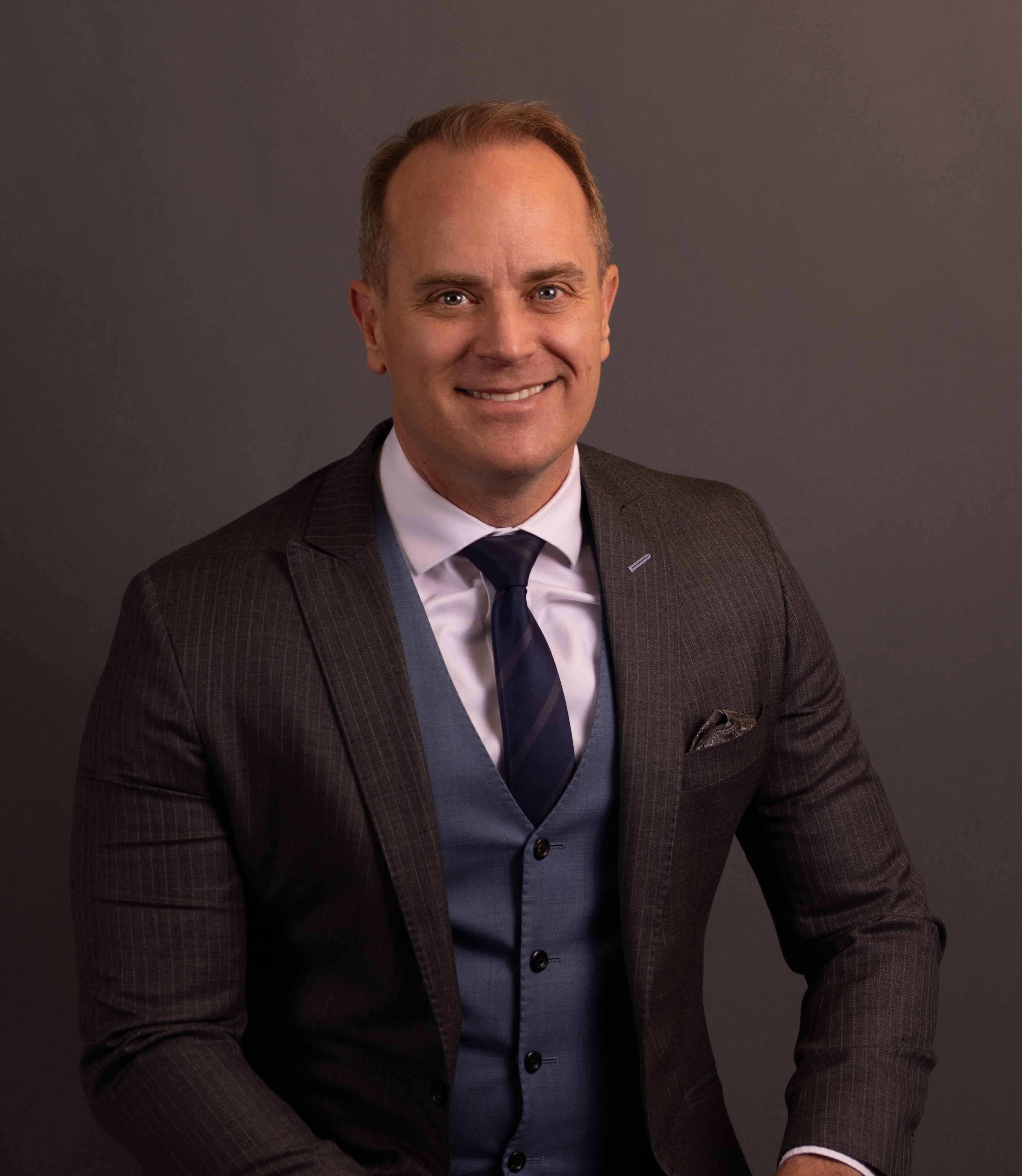
President and Founder of Stonebriar Wealth Advisors
Gary Preisser is the Managing Partner and co-founder of Stonebriar Wealth Advisors, a boutique financial planning firm based in Utah. With over 23 years of experience in the financial services industry, Gary began his career in accounting and tax planning, which gave him a deep understanding of the real financial challenges business owners and high-earning families face. He now specializes in helping clients build intentional wealth strategies focused on cash flow optimization, proactive tax planning, retirement security, and legacy planning.
Gary is known for his straightforward, no-nonsense approach and his criticism of the traditional “cookie-cutter” financial advice model. Together with his partner Shea Swenson, he built Stonebriar Wealth Advisors to deliver personalized, holistic financial guidance that goes far beyond typical investment management. He is a passionate financial educator who regularly speaks on practical wealth-building topics and enjoys sharing clear, actionable insights with listeners.